
01 · Printing
Screen printing machines: how the press works and which type to buy
The press is the machine that holds the material, brings the screen down onto it and drives the squeegee across the image. The material decides the press. Rigid or thick sheets go on a flatbed screen printing machine. Thin flexible sheets in long runs go on a stop-cylinder press. Continuous webs go on a roll to roll (reel to reel) machine. Glass panels, circuit boards, moulded parts and labels each have presses built around that part.
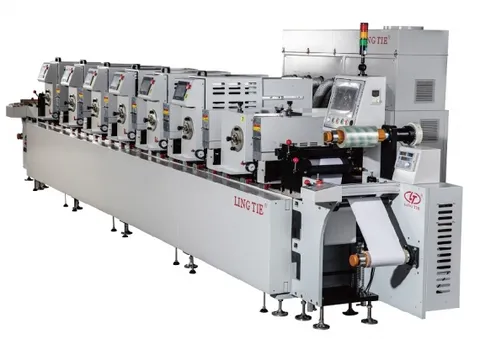
Sunstar Graphics is the exclusive distributor in India for ATMA flatbed and application-specific printers from Taiwan, SPS stop-cylinder presses from Germany and Lingtie roll-to-roll printers from China, and installs, trains and services them from Mumbai. The sections below explain the print cycle, what to check before buying, and the seven types of press in the range.
How it works
- Load
The sheet, web or part is placed on the bed or fed in by a feeder and located against stops or registration pins. On an automatic press a camera or CCD system reads marks on the material and corrects the position.
- Hold
Vacuum pulls a flat sheet down onto the bed. A cylinder press grips the leading edge of the sheet on the cylinder. A part printer holds the piece in a fixture.
- Flood
The flood bar spreads ink over the screen without pushing it through, so the mesh is filled and ready.
- Print
The screen comes down to the set off-contact gap and the squeegee travels across the image at a set angle, pressure and speed, pushing ink through the stencil onto the material. On a cylinder press the cylinder turns under the moving screen instead.
- Release
The mesh snaps off the print behind the squeegee. The screen lifts, the vacuum releases and the sheet is taken off by hand, by a take-off unit or by a conveyor into the dryer.
- Repeat
The next sheet is loaded. A semi-automatic flatbed prints around 500 sheets an hour; an automatic flatbed with feeder prints more; a stop-cylinder press prints 1,800 to 4,000 an hour.
See the machines work
Animated models of the machines in this category, one cycle each. Press play.
All films →How to choose
What to settle before asking for a quotation.
Buying guides →Material and thickness
List every material you print, with sheet size and thickness. Flatbeds take rigid material up to 25 mm; cylinder presses take flexible sheets only; roll-to-roll takes webs. The largest sheet sets the print area.
Print area and sheet size
Choose a print area that covers your largest image with margin for the frame and the squeegee overrun. Oversizing costs more and slows the cycle; undersizing means jobs you cannot take.
Volume per day
Count sheets per shift rather than per month. Around 500 an hour suits a semi-automatic flatbed; above that, an automatic flatbed with feeder and stacker; above 1,800 an hour on flexible sheet, a cylinder press.
Registration and detail
Multicolour work on dials, membrane switches and electronics needs repeat accuracy in hundredths of a millimetre and, for the finest work, CCD camera registration. Ask for the accuracy figure and how it is measured.
Space, power and the line after the press
Measure the floor, the ceiling height and the door. Check the power supply and compressed air. Plan where the dryer, feeder and stacker go, because the press is one part of a line.
Flatbed printers
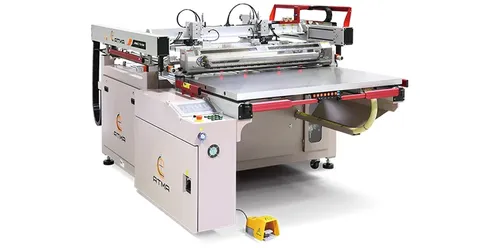
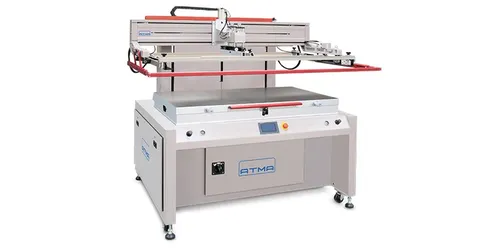
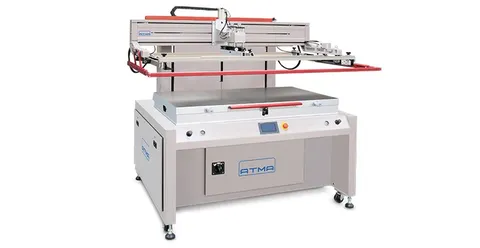
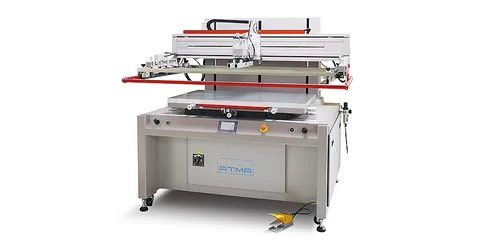
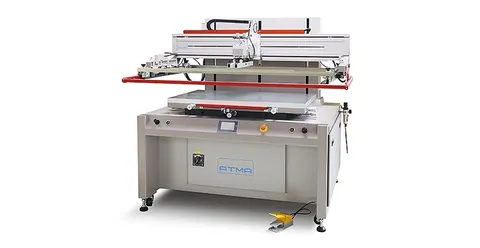
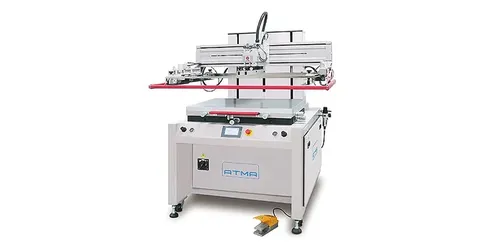
Sheet held flat on a vacuum bed, print head moves the squeegee across the screen. Rigid and flexible sheets up to 25 mm, semi-automatic to fully automatic.
All 44 models →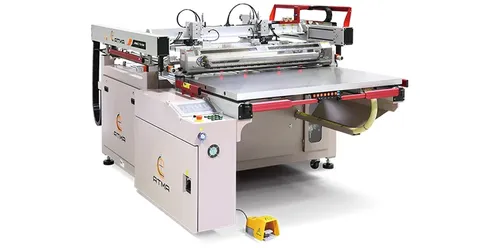
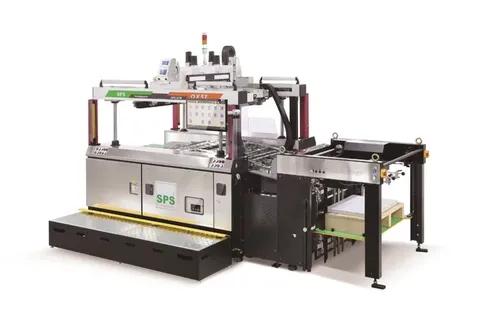
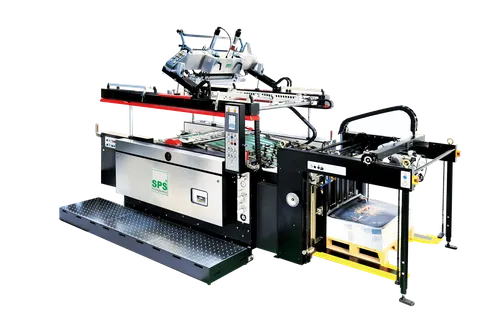
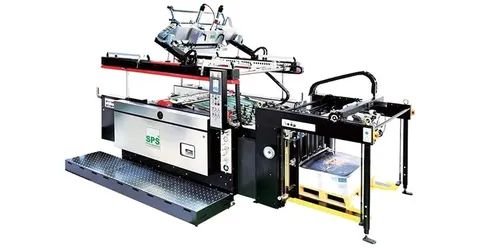
Stop-cylinder presses
Flexible sheet gripped on a cylinder that turns under the screen. The fastest way to print sheets, 1,800 to 4,000 an hour, straight into the dryer.
All 8 models →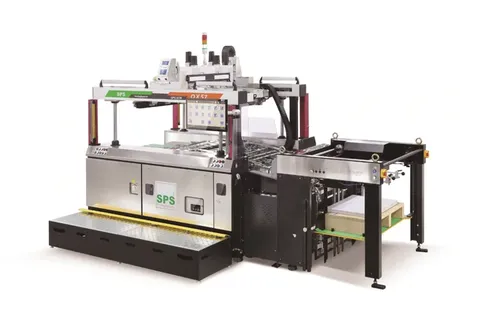
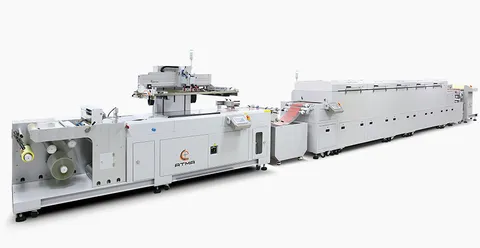
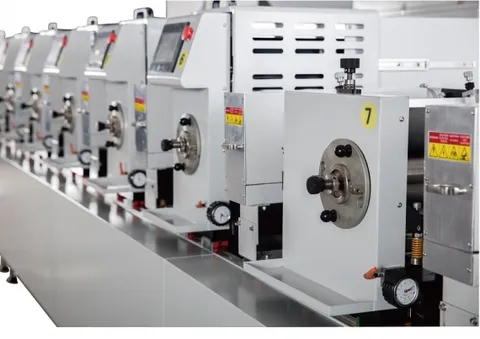
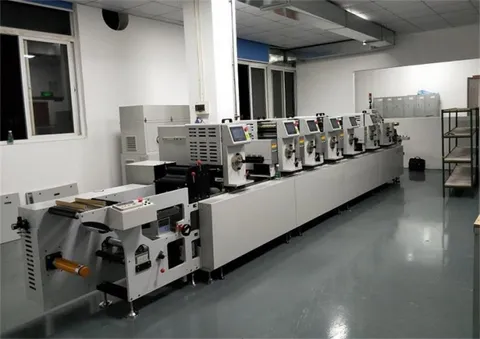
Roll-to-roll printers
A continuous web from reel to reel, registered by camera on every repeat, with the dryer in line before rewind.
All 11 models →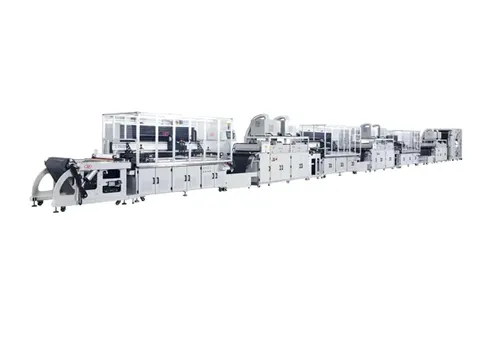
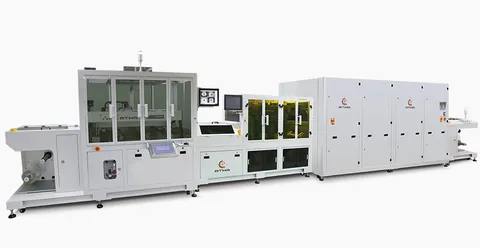
Glass printing lines
Flatbeds with glass handling, large print areas and registration built for panels, appliance glass and PV glass.
All 13 models →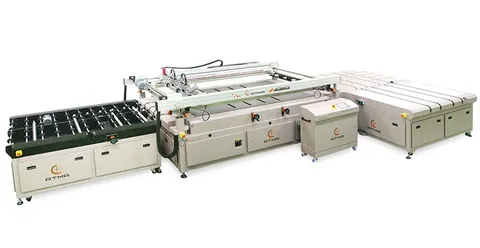
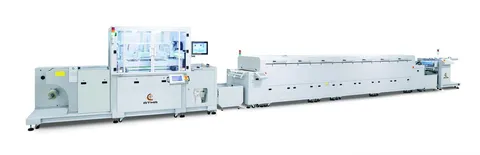
PCB and electronics printers
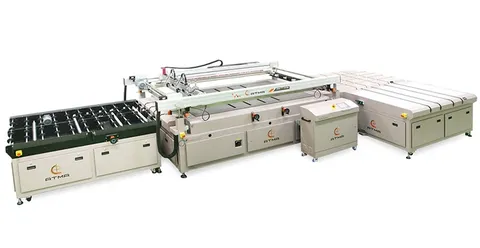
Presses with pin or camera registration for solder mask, legend and conductive layers on rigid and flexible boards.
All 14 models →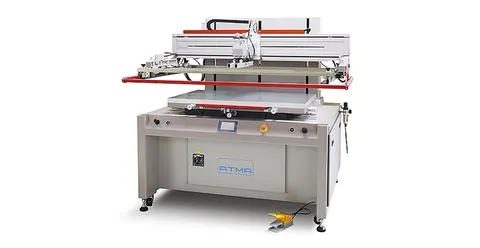
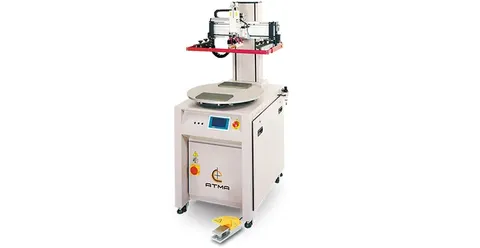
Part and index-table printers
Fixtures and index tables that bring moulded parts, gaskets and aluminium pieces under the screen one at a time.
All 6 models →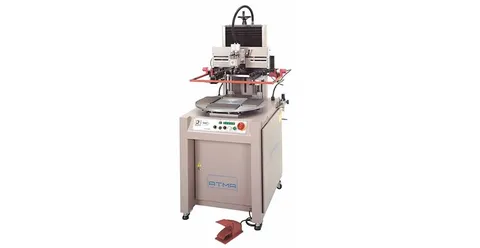
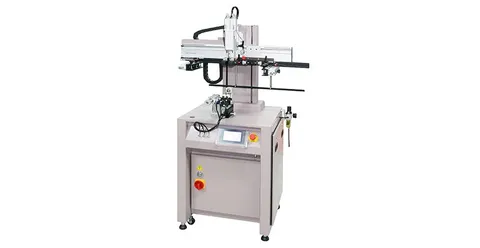
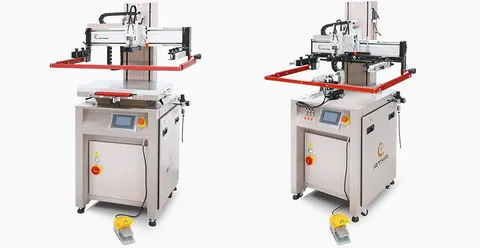
Label and sticker printers
Sheet and web presses set up for self-adhesive stock, with clear-coat and multicolour options.
All 5 models →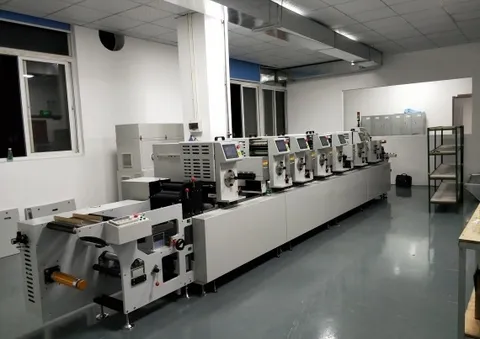
Machine types in this category
Each page explains one class of machine and lists its models.
Fully automatic flatbeds, cylinder presses and reel-fed printers
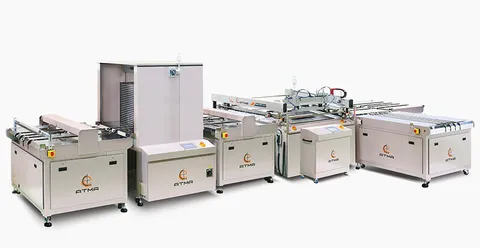
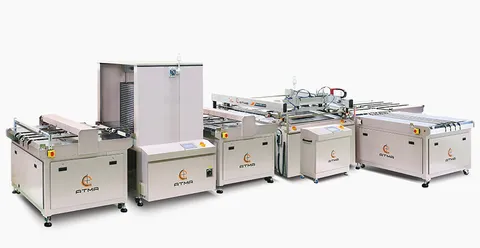
An automatic screen printing machine feeds the sheet, registers it, prints it and delivers it to the dryer without an operator handling each piece.
See models →Machine typeOperator-fed electric flatbeds and precision part printers
A semi-automatic screen printing machine prints each sheet by motor while an operator loads and unloads it.
See models →Machine typeFlat bed presses for rigid and flexible sheets up to 25 mm thick
A flatbed screen printing machine holds the sheet flat on a vacuum bed.
See models →Machine typeSPS presses for flexible sheets at up to 4,000 sheets an hour
A stop-cylinder screen printing press grips a flexible sheet on a cylinder.
See models →Machine typeReel to reel printers with camera registration and in-line curing
A roll-to-roll screen printing machine prints a continuous web of film or label stock from one reel to another.
See models →Machine typeCamera-aligned presses for fine lines and multilayer printing
A CCD registration screen printing machine uses cameras to find register marks on the sheet or web before each print.
See models →Guides
Written for the person choosing the machine.
All guides →Flatbed vs cylinder screen printing machine
Choose a flatbed if you print rigid or thick material, or mixed jobs in short and medium runs at around 500 sheets an hour. Choose a stop-cylinder press if you print thin flexible sheets in long runs and need 1,800 to 4,000 sheets an hour. Many plants run both.
Read →GuideSemi-automatic vs fully automatic screen printing machine
A semi-automatic screen printing machine prints by itself, but an operator loads and removes each sheet. A fully automatic machine also feeds, registers and delivers the sheet to the dryer. Semi-automatic suits short runs and many job changes. Fully automatic suits steady volume, where output and consistency repay the higher cost.
Read →GuideHow to choose an industrial screen printing machine
Five facts about your job decide the machine: the material and its thickness, the print size, the output you need per hour, the register tolerance and the ink. With these in hand, the choice between a flatbed, a cylinder press, a roll-to-roll press or a purpose-built printer is usually clear.
Read →GuideImported vs Indian screen printing machine
A lower-cost Indian-made screen printing machine is a sensible choice for simple graphics, wide tolerances, short runs and a tight budget. A precision imported press earns its cost on multi-layer and functional work, tight register and high volume, where rejects are expensive. The tolerance of your part and the cost of a rejected sheet decide it.
Read →GuideScreen printing vs digital printing for industrial parts
Screen printing is the better process for volume production, for thick or opaque ink films and for functional inks such as silver, carbon and glass enamel. Digital printing is better for short runs, many design versions and variable data. It is common to use digital for samples and screen printing for production.
Read →GuideHow membrane switches are made
A membrane switch is made by screen printing a graphic overlay and one or two circuit layers on plastic film, then cutting them and laminating them with a spacer and adhesive. The circuit is printed in silver and carbon ink, with a dielectric layer for insulation. Each printed layer is dried or cured before the next, and each has to register to the others.
Read →Other categories: Pre-press and screen making, Dryers and curing, Feeders, stackers and converting, Squeegees and tools. See the process stage by stage or start from what you print.
From Sunstar Academy
Real footage and short lessons from Sunstar's own channel.
All videos →

Questions buyers ask
Which screen printing machine is best for industrial work?
It depends on the material. A flatbed for rigid or thick sheets and mixed jobs, a stop-cylinder press for thin flexible sheets in long runs, and a roll-to-roll machine for webs. Sunstar matches the model to your samples.
What is the price of an industrial screen printing machine in India?
Imported industrial presses range from roughly ten lakh rupees to over one crore depending on type, size and automation. Send an enquiry with your material and sheet size for a quotation.
What is the difference between semi-automatic and fully automatic screen printing machines?
On a semi-automatic press the operator loads and unloads each sheet and the machine prints. A fully automatic press feeds, prints and takes off by itself, so it runs faster with fewer people.
Does Sunstar install and service the machine?
Yes. Sunstar Graphics installs the machine, trains the operators and services it from Mumbai for factories across India.
Inquiry
Tell Sunstar what you print.
An engineer replies within one working day with the right type and model, and Indian pricing. Delivered and installed anywhere in India.