
- Home
- Applications
- Printed sensors and seat mats
Application · Electronics · Automotive
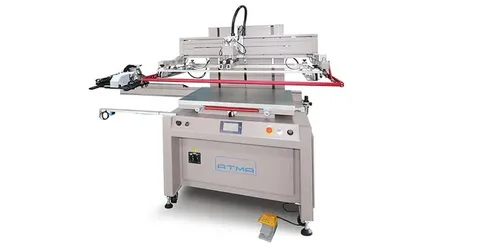
Printed electronics screen printing machine
Printed sensors, heaters and seat occupancy mats. Seat occupancy sensors, force sensors and printed heaters are functional prints. The resistance of the part depends on the ink film, so deposit has to be the same on every sheet.
- Seat occupancy and weight sensors
- Force-sensing resistors
- Printed heaters and antennas
PET film, in sheets or on the reel
- Repeatable ink deposit
- Register between conductive and dielectric layers
- Thorough drying between layers
A typical Sunstar line
These machines are commonly specified together for this job. Sunstar confirms the final line against your material, print size and volume.
All machines →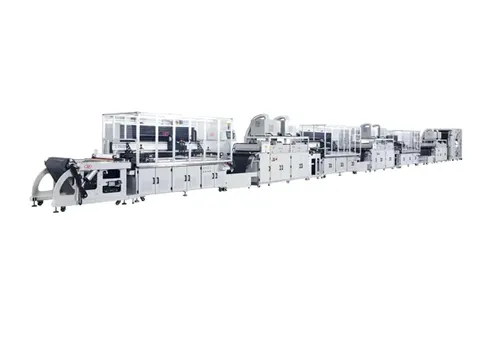
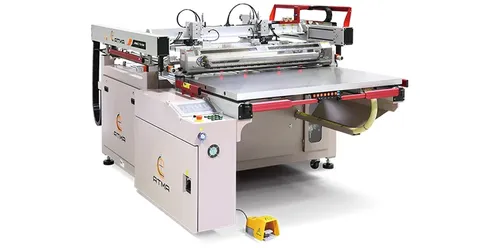
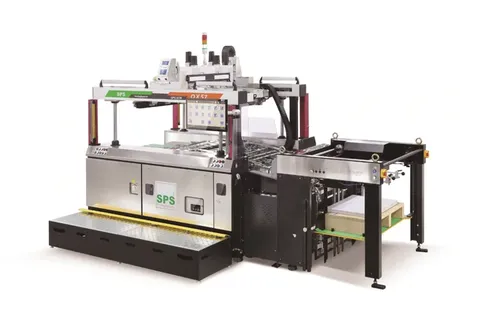
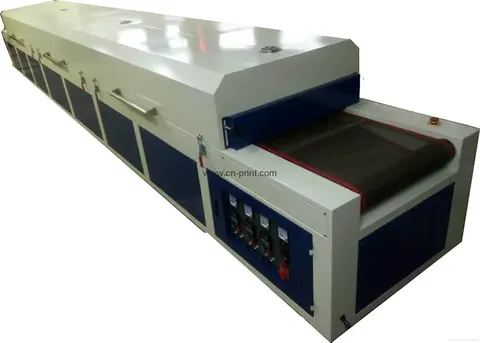
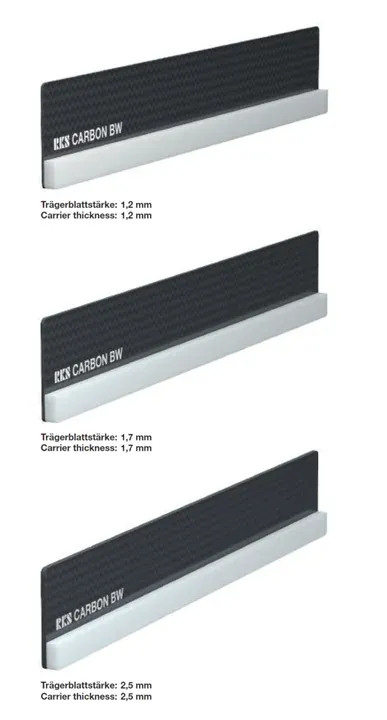
The press is one part of the line. See all printers, pre-press, dryers, handling, squeegees.
From Sunstar Academy
Real footage and short lessons from Sunstar's own channel.
All videos →

Questions buyers ask
Why does the machine matter for printed sensors?
The electrical value of the part follows the ink thickness. A servo print stroke and a stable screen lift keep the deposit the same from sheet to sheet.
Also searched as
printed electronics machine, seat sensor printing, conductive ink screen printing machine, FSR printing, printed electronics printing machine, sensor printing machine, printed heater printing machine, silver paste printing machine, conductive ink printing machine
Machine types for this job
See every model in each class.
Flat bed presses for rigid and flexible sheets up to 25 mm thick
A flatbed screen printing machine holds the sheet flat on a vacuum bed.
See models →Machine typeReel to reel printers with camera registration and in-line curing
A roll-to-roll screen printing machine prints a continuous web of film or label stock from one reel to another.
See models →Machine typeCamera-aligned presses for fine lines and multilayer printing
A CCD registration screen printing machine uses cameras to find register marks on the sheet or web before each print.
See models →Machine typePneumatic mesh stretching to a set, repeatable tension
A screen stretching machine pulls the mesh to a set tension in both directions and holds it while the mesh is glued to the frame.
See models →Machine typeAutomatic emulsion coating to the same thickness on every screen
A screen coating machine applies photo emulsion to the stretched mesh.
See models →Machine typeInfrared hot-air tunnels for solvent, water-based and conductive inks
An IR hot-air conveyor dryer carries the printed sheet on a belt through a heated tunnel.
See models →Guides
Useful for this job.
All guides →Imported vs Indian screen printing machine
A lower-cost Indian-made screen printing machine is a sensible choice for simple graphics, wide tolerances, short runs and a tight budget. A precision imported press earns its cost on multi-layer and functional work, tight register and high volume, where rejects are expensive. The tolerance of your part and the cost of a rejected sheet decide it.
Read →GuideScreen printing vs digital printing for industrial parts
Screen printing is the better process for volume production, for thick or opaque ink films and for functional inks such as silver, carbon and glass enamel. Digital printing is better for short runs, many design versions and variable data. It is common to use digital for samples and screen printing for production.
Read →GuideHow membrane switches are made
A membrane switch is made by screen printing a graphic overlay and one or two circuit layers on plastic film, then cutting them and laminating them with a spacer and adhesive. The circuit is printed in silver and carbon ink, with a dielectric layer for insulation. Each printed layer is dried or cured before the next, and each has to register to the others.
Read →GuideHow glucose test strips are screen printed
A glucose test strip is made by screen printing carbon and silver electrodes on plastic film, printing an insulation layer that leaves a small electrode area open, and adding the enzyme reagent. Many strips are printed side by side on one sheet or along a reel, then covered and cut apart. The electrode area sets the reading, so line width, ink deposit and register are held tightly.
Read →GuideSqueegee pressure, angle and hardness
Squeegee pressure, angle and hardness together decide how much ink passes through the screen and how sharp the printed edge is. Use the lowest pressure that gives a complete print, an angle of about 70 to 75 degrees as a starting point, and a blade of 70 to 75 Shore A for general work. A softer blade, a flatter angle and a slower stroke all put down more ink.
Read →GuideMesh count for conductive ink
For silver and carbon conductive pastes on membrane switches and printed sensors, polyester mesh of about 61 to 90 threads per cm is typical. Finer tracks use polyester of 120 threads per cm or more, or stainless steel mesh of 325 to 400 threads per inch. Start with the mesh named in the paste maker's data sheet, because particle size and target resistance decide the choice.
Read →Related applications
Dials and clusters
Dials and instrument cluster appliqués are printed in six to twelve layers on polycarbonate.
See the line →Automotive · Plastic and metal partsIMD / in-mould decoration
IMD films are screen printed flat, then formed and back-moulded into a plastic part.
See the line →Automotive · Labels, nameplates and packaging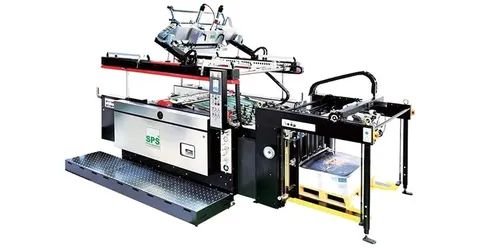
Vehicle decals and graphics
Two-wheeler and vehicle graphics are printed in long runs on self-adhesive vinyl, in several colours plus a clear coat.
See the line →Inquiry
Tell Sunstar what you print.
An engineer replies within one working day with machine options and Indian pricing. Delivered and installed anywhere in India.