
- Home
- Applications
- Spot UV and special effects
Application · Labels, nameplates and packaging
Spot UV screen printing machine
Spot UV and special-effect finishing. Spot UV, texture, glitter and raised effects are screen printed onto offset-printed sheets. Screen lays down a film many times thicker than offset varnish.
- Spot UV on cartons and covers
- Texture, glitter and raised effects
- Braille and tactile varnish
Printed paper and board
- Register to the printed sheet
- High speed
- UV curing in line
A typical Sunstar line
These machines are commonly specified together for this job. Sunstar confirms the final line against your material, print size and volume.
All machines →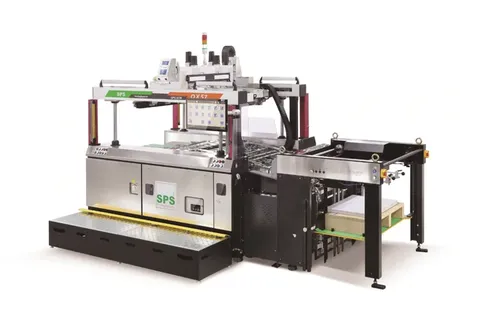
The press is one part of the line. See all printers, pre-press, dryers, handling, squeegees.
Questions buyers ask
Why screen print spot UV?
A screen deposits a much thicker varnish film than offset or flexo, which gives the high-gloss, raised look.
Also searched as
spot UV machine, UV varnish screen printing machine, print finishing screen press, spot uv printing machine, uv coating machine, spot uv coating machine, uv spot machine, texture uv printing machine
Machine types for this job
See every model in each class.
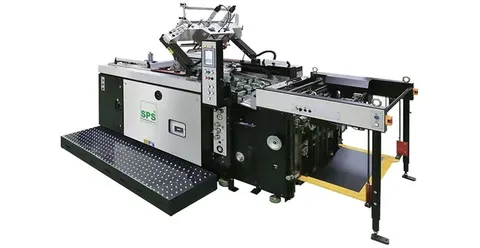
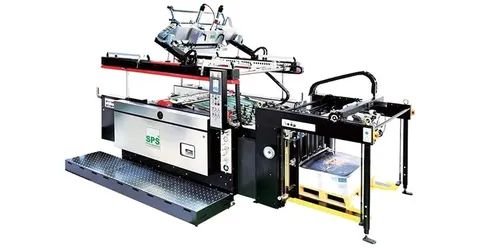
SPS presses for flexible sheets at up to 4,000 sheets an hour
A stop-cylinder screen printing press grips a flexible sheet on a cylinder.
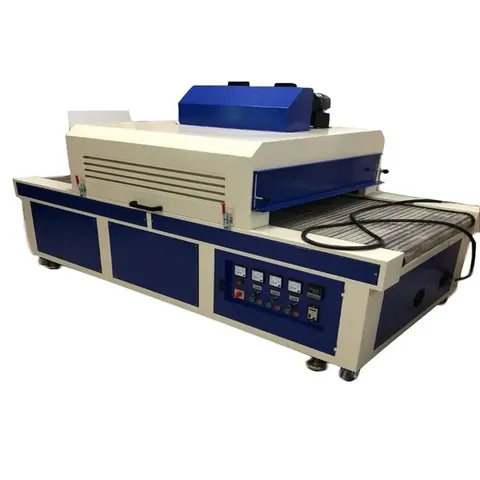
See models →Machine typeUV conveyor dryers that cure UV inks in seconds after the press
A UV curing machine for screen printing is a conveyor that carries the printed sheet under UV lamps.
See models →Guides
Useful for this job.
All guides →Flatbed vs cylinder screen printing machine
Choose a flatbed if you print rigid or thick material, or mixed jobs in short and medium runs at around 500 sheets an hour. Choose a stop-cylinder press if you print thin flexible sheets in long runs and need 1,800 to 4,000 sheets an hour. Many plants run both.
Read →GuideUV ink not curing
UV ink that stays tacky, scratches off or fails a tape test has usually received too little UV energy for its film thickness and colour. Measure the UV dose on the belt with a radiometer, in mJ/cm², and compare it with the figure in the ink maker's data sheet. The common causes are an aged lamp, dirty reflectors, a belt running too fast and an ink film that is too thick.
Read →GuideEmulsion thickness (EOM)
EOM, or emulsion over mesh, is the thickness of emulsion that stands beyond the mesh on the print side of the screen. For fine lines and halftones it is typically 3 to 8 microns, or about 10 to 20 percent of the mesh thickness. EOM is set by how the screen is coated: the number of coats, the side they are applied from, the coating speed and the trough.
Read →Related applications
Vehicle decals and graphics
Two-wheeler and vehicle graphics are printed in long runs on self-adhesive vinyl, in several colours plus a clear coat.
See the line →Labels, nameplates and packagingLabels and stickers
Product, warning and rating labels are printed on self-adhesive films in sheets or on the reel.
See the line →Labels, nameplates and packaging · Plastic and metal parts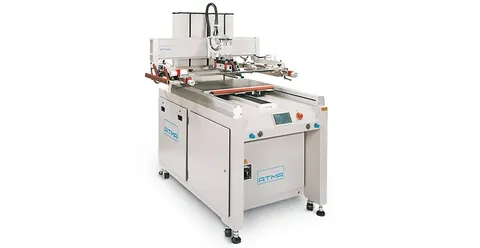
Nameplates and metal labels
Nameplates are printed on anodised aluminium, stainless steel and polycarbonate.
See the line →Inquiry
Tell Sunstar what you print.
An engineer replies within one working day with machine options and Indian pricing. Delivered and installed anywhere in India.