
- Home
- Applications
Applications · 7 industries
Screen printing machines by application
Pick what you print. Each page shows the material, what the job needs from a machine, and a typical Sunstar line.
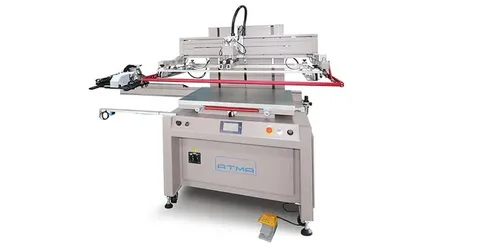
Dials and clusters
Dials and instrument cluster appliqués are printed in six to twelve layers on polycarbonate.
See the line →Automotive · Plastic and metal parts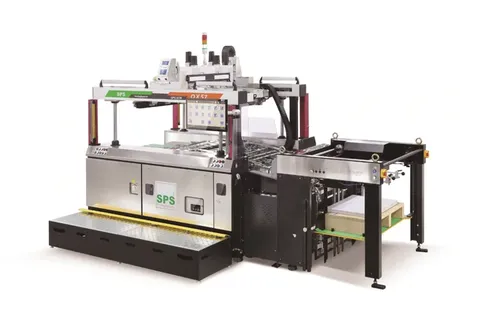
IMD / in-mould decoration
IMD films are screen printed flat, then formed and back-moulded into a plastic part.
See the line →Automotive · Labels, nameplates and packaging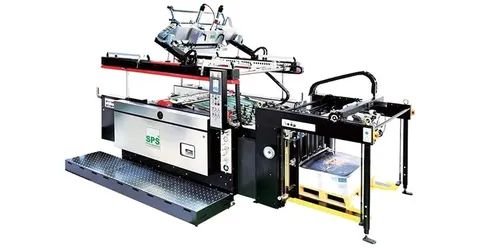
Vehicle decals and graphics
Two-wheeler and vehicle graphics are printed in long runs on self-adhesive vinyl, in several colours plus a clear coat.
See the line →Automotive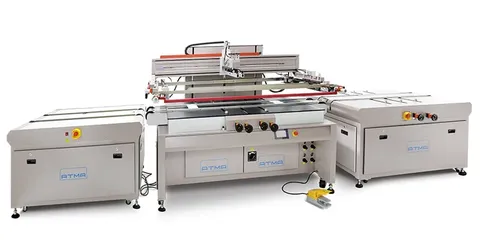
Gaskets
Gaskets get a printed sealing bead or coating in silicone or elastomer.
See the line →Electronics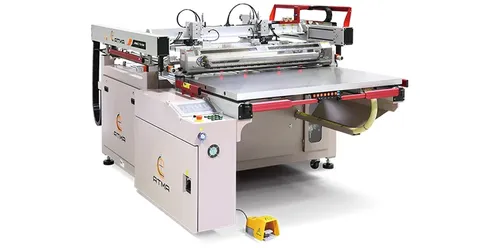
Membrane switches and overlays
A membrane switch has a printed graphic overlay and a printed circuit of silver and carbon ink.
See the line →Electronics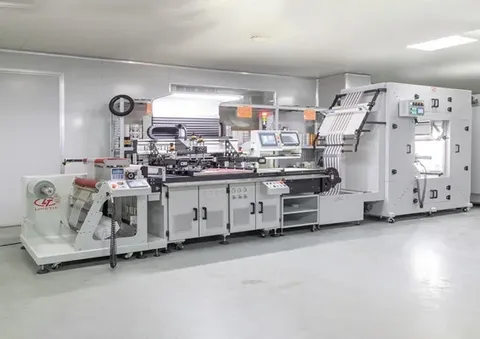
Flexible circuits (FPC)
Flexible circuits are printed on thin film that stretches and moves.
See the line →Electronics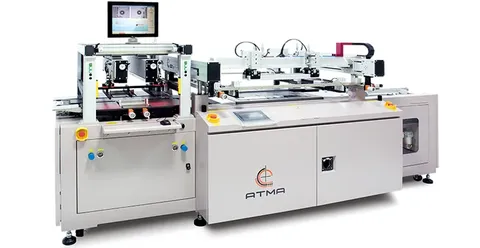
Rigid PCBs
Rigid boards are screen printed with solder mask, legend, carbon and peelable mask.
See the line →Electronics · Glass and solar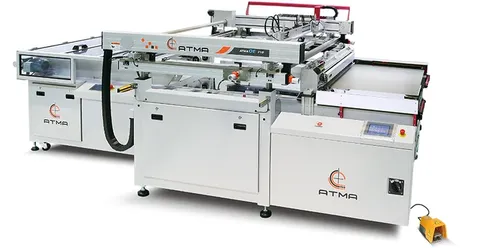
Touch panels and cover glass
Cover glass gets a printed border in black or white, with windows for cameras and sensors.
See the line →Electronics · Automotive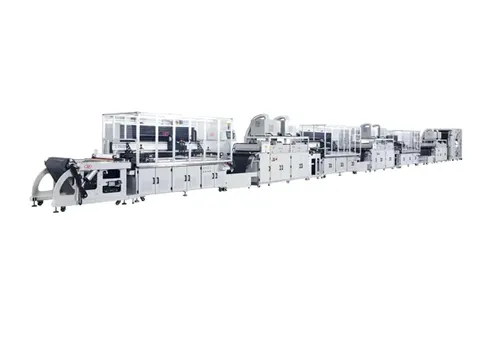
Printed sensors and seat mats
Seat occupancy sensors, force sensors and printed heaters are functional prints.
See the line →Medical and diagnostics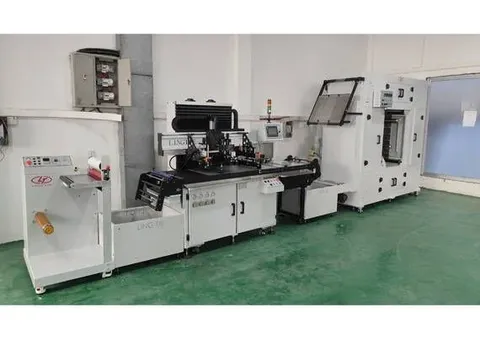
Glucose test strips
A test strip is several printed layers: carbon and silver electrodes, then insulation.
See the line →Medical and diagnostics · Plastic and metal parts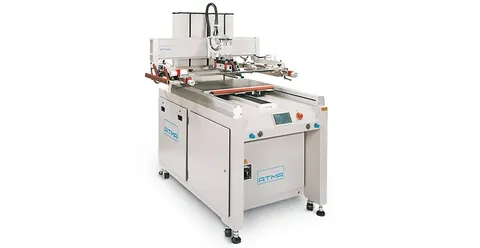
Medical device panels
Medical devices carry printed overlays, scales and markings on flat panels and moulded housings.
See the line →Glass and solar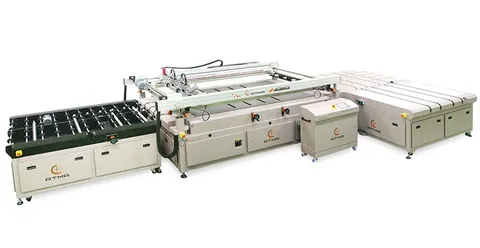
Appliance glass
Refrigerator doors, oven doors and hob tops are printed direct onto glass, edge to edge, before tempering.
See the line →Glass and solar · Automotive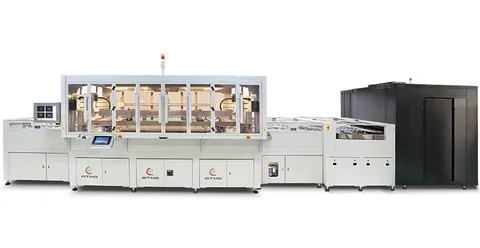
Architectural and automotive glass
Architectural panels and automotive glass are printed with ceramic ink: black bands, dot fades and heater lines.
See the line →Glass and solarSolar cells and PV glass
Solar manufacturing uses screen printing for fine silver lines on cells and for coatings on module glass.
See the line →Labels, nameplates and packagingLabels and stickers
Product, warning and rating labels are printed on self-adhesive films in sheets or on the reel.
See the line →Labels, nameplates and packaging · Plastic and metal partsNameplates and metal labels
Nameplates are printed on anodised aluminium, stainless steel and polycarbonate.
See the line →Labels, nameplates and packagingSpot UV and special effects
Spot UV, texture, glitter and raised effects are screen printed onto offset-printed sheets.
See the line →Labels, nameplates and packaging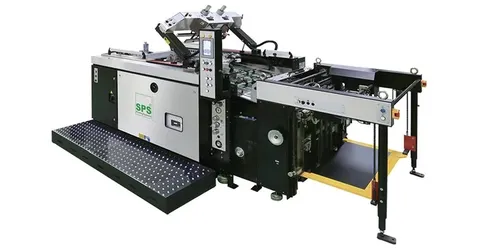
Security printing
Security features such as colour-shifting ink, tactile marks and scratch-off panels are screen printed, because they need a thick, exact ink film.
See the line →Labels, nameplates and packaging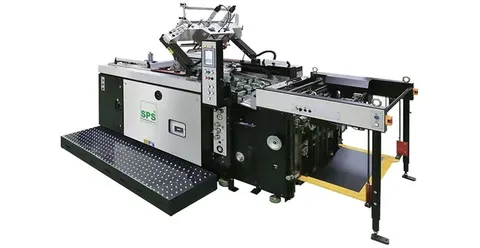
Plastic cards
Plastic, bank and ID cards are typically made of four laminated layers of PVC.
See the line →Labels, nameplates and packaging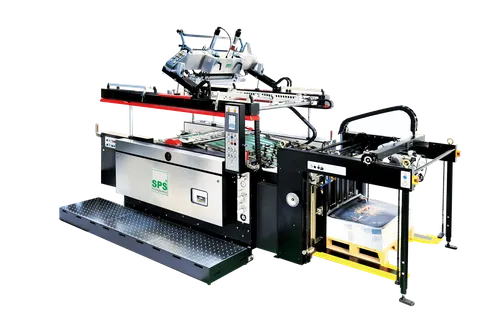
Ceramic decals
Ceramic decals are screen printed on transfer paper in many solid colours, in very close registration.
See the line →Labels, nameplates and packaging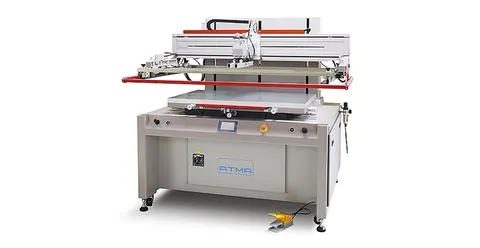
Signs and POS graphics
Signs, displays and point-of-sale graphics are printed in large formats on rigid and flexible sheet.
See the line →Textile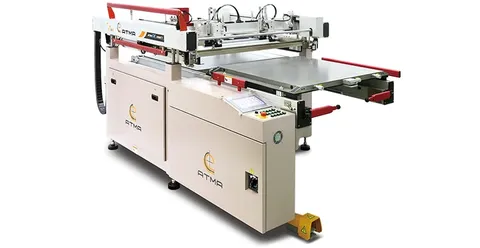
Heat-transfer labels
Heat-transfer and tagless labels are printed in reverse on release film or paper, in several colours plus adhesive.
See the line →Plastic and metal parts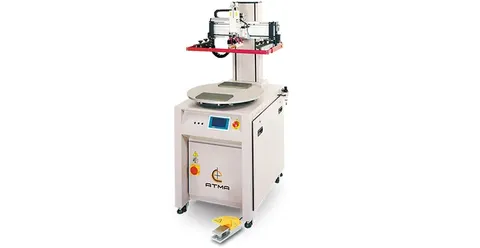
Moulded parts and housings
Housings, panels and containers are printed after moulding.
See the line →Your job is not on the list? Tell Sunstar what you print and on which material. Or browse the machines by stage: printers, pre-press, dryers, handling, squeegees.
Common questions
Which screen printing machine do I need for my product?
Tell Sunstar what you print, on which material and how many an hour. The application pages on this site show a typical line for each job.
What is the difference between a flatbed and a cylinder screen printing machine?
A flatbed holds the sheet on a vacuum bed while the squeegee travels, and prints rigid or flexible material up to 25 mm thick. A stop-cylinder press grips a flexible sheet on a turning cylinder and reaches 1,800 to 4,000 sheets an hour.
Does Sunstar Graphics install and service the machines?
Yes. Sunstar engineers install the line, train operators on site and provide service and spares from Mumbai.
Inquiry
Your job is not on the list?
Tell Sunstar what you print and on which material. An engineer replies within one working day with a line.