
- Home
- Industries
- Plastic and metal parts
Industry · 4 applications
Screen printing machines for plastic and metal parts
Plastic and metal parts work covers imd / in-mould decoration, medical device panels, nameplates and metal labels, moulded parts and housings. IMD films are screen printed flat, then formed and back-moulded into a plastic part. Medical devices carry printed overlays, scales and markings on flat panels and moulded housings.
Applications
Each page shows the material, what the job needs, and a typical Sunstar line.
All applications →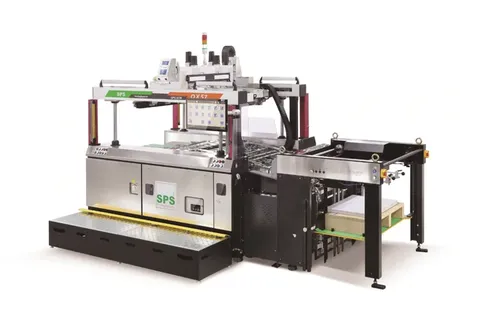
IMD / in-mould decoration
IMD films are screen printed flat, then formed and back-moulded into a plastic part.
See the line →Medical and diagnostics · Plastic and metal parts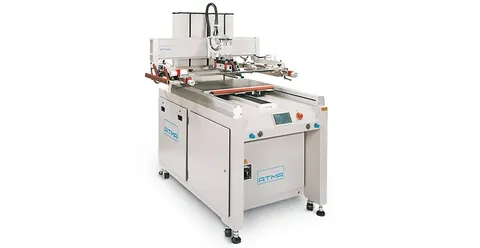
Medical device panels
Medical devices carry printed overlays, scales and markings on flat panels and moulded housings.
See the line →Labels, nameplates and packaging · Plastic and metal partsNameplates and metal labels
Nameplates are printed on anodised aluminium, stainless steel and polycarbonate.
See the line →Plastic and metal parts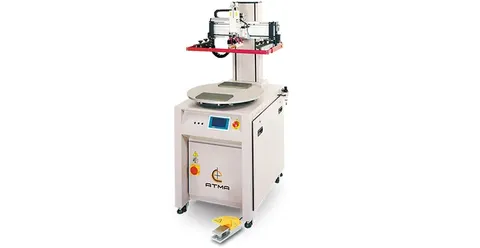
Moulded parts and housings
Housings, panels and containers are printed after moulding.
See the line →Machines used most
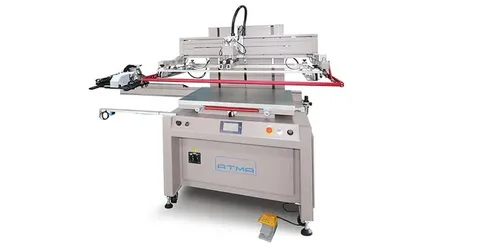
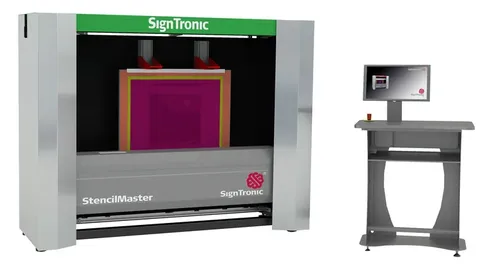
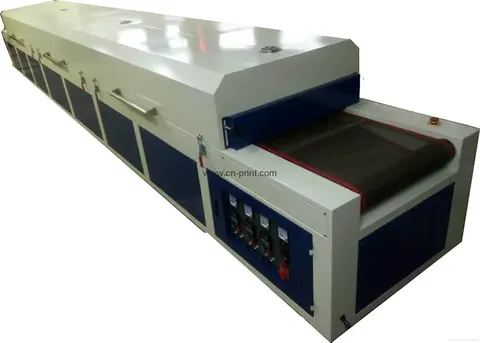
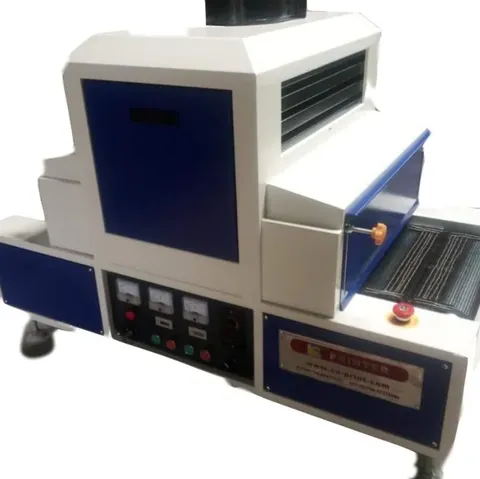
Counted across the typical lines for plastic and metal parts applications.
All machines →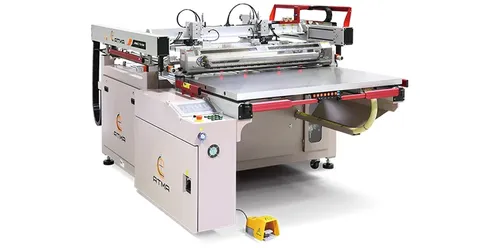
Guides
Linked from the applications above.
All guides →Flatbed vs cylinder screen printing machine
Choose a flatbed if you print rigid or thick material, or mixed jobs in short and medium runs at around 500 sheets an hour. Choose a stop-cylinder press if you print thin flexible sheets in long runs and need 1,800 to 4,000 sheets an hour. Many plants run both.
Read →GuideFine-line screen printing on polycarbonate
Fine lines on polycarbonate need four things to be right together: a fine mesh at high tension, a thin and flat stencil with a sharp image, a sharp squeegee at low pressure, and a clean, flat sheet free of static. Lines of around 100 to 150 microns are typically achievable on a well set flatbed press. Finer lines need closer control of every step.
Read →GuideRegistration problems in multicolour printing
Registration problems in multicolour screen printing come from four places: the screens, the substrate, the press and the artwork. Look at how the error behaves before changing anything. A constant error is a setup fault. A random error is a feeding fault. An error that grows across the sheet is a change of size in the screen or the substrate.
Read →GuideHow membrane switches are made
A membrane switch is made by screen printing a graphic overlay and one or two circuit layers on plastic film, then cutting them and laminating them with a spacer and adhesive. The circuit is printed in silver and carbon ink, with a dielectric layer for insulation. Each printed layer is dried or cured before the next, and each has to register to the others.
Read →GuideHow glucose test strips are screen printed
A glucose test strip is made by screen printing carbon and silver electrodes on plastic film, printing an insulation layer that leaves a small electrode area open, and adding the enzyme reagent. Many strips are printed side by side on one sheet or along a reel, then covered and cut apart. The electrode area sets the reading, so line width, ink deposit and register are held tightly.
Read →GuideSemi-automatic vs fully automatic screen printing machine
A semi-automatic screen printing machine prints by itself, but an operator loads and removes each sheet. A fully automatic machine also feeds, registers and delivers the sheet to the dryer. Semi-automatic suits short runs and many job changes. Fully automatic suits steady volume, where output and consistency repay the higher cost.
Read →Questions buyers ask
What is IMD printing?
In-mould decoration. A film is screen printed, formed to shape and placed in the injection mould, so the graphic ends up inside the finished part.
Can one press print flat panels and moulded parts?
Flat panels run on a flatbed. Moulded parts run on an index-table printer with part fixtures.
Which machine prints aluminium nameplates?
An electric flatbed such as the ATMA AT-60PPD or AT-80P, which takes rigid sheet up to 25 mm thick.
How are moulded parts held for printing?
Each part sits in a fixture made for its shape. The index table brings the fixture under the screen and out to unloading.
Inquiry
Tell Sunstar what you print.
An engineer replies within one working day with machine options and Indian pricing. Delivered and installed anywhere in India.