
- Home
- Applications
- Glucose test strips
Application · Medical and diagnostics
Glucose strip printing machine
Glucose and biosensor test strips. A test strip is several printed layers: carbon and silver electrodes, then insulation. The electrode area sets the reading, so line width and register are held tightly across millions of strips.
- Blood glucose test strips
- Biosensor electrodes
- Diagnostic strips
PET film, in sheets or on the reel
- Tight register between electrode layers
- Consistent line width
- Clean handling
A typical Sunstar line
These machines are commonly specified together for this job. Sunstar confirms the final line against your material, print size and volume.
All machines →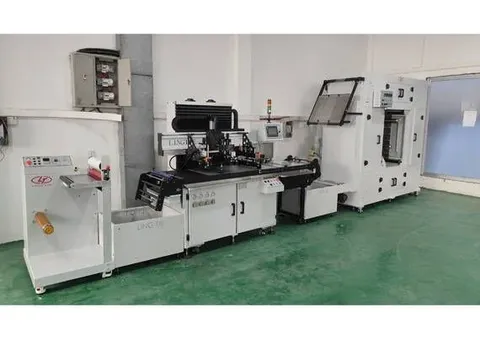
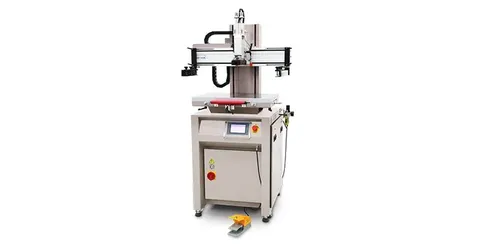
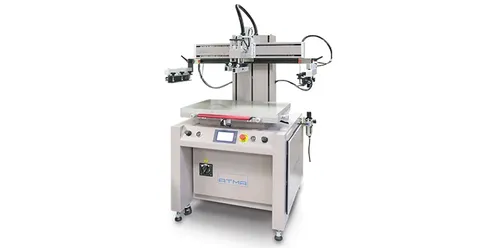
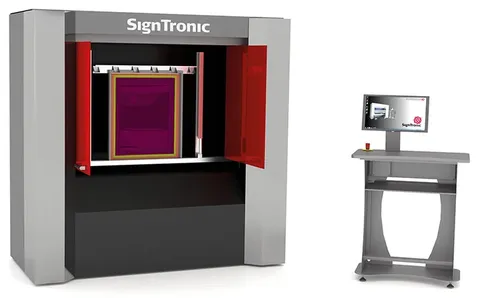
The press is one part of the line. See all printers, pre-press, dryers, handling, squeegees.
From Sunstar Academy
Real footage and short lessons from Sunstar's own channel.
All videos →
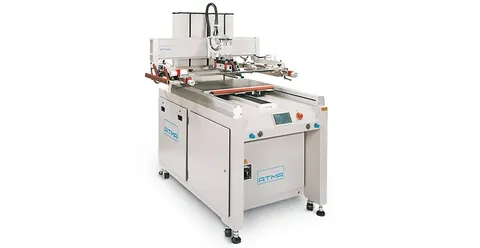
ATMA OE MF44 | Automatic CCD Screen Printer for Printed Electronics
ATMA OE MF44 is an automatic CCD registering screen printer designed for precision applications in medical diagnostics and printed electronics.
Questions buyers ask
Which machine prints glucose test strips?
Small-format fully automatic flatbeds such as the ATMA AT-45FA, or roll-to-roll presses such as the Lingtie LTA-4050 for continuous production.
Also searched as
glucose strip screen printing, biosensor printing machine, test strip printing machine, diagnostic strip printer, blood glucose strip printing machine, sugar test strip printing machine, biosensor strip printing, screen printed electrode machine
Machine types for this job
See every model in each class.
Reel to reel printers with camera registration and in-line curing
A roll-to-roll screen printing machine prints a continuous web of film or label stock from one reel to another.
See models →Machine typeCamera-aligned presses for fine lines and multilayer printing
A CCD registration screen printing machine uses cameras to find register marks on the sheet or web before each print.
See models →Machine typeInfrared hot-air tunnels for solvent, water-based and conductive inks
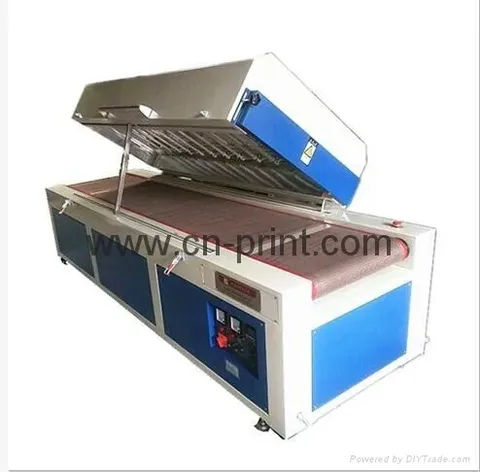
An IR hot-air conveyor dryer carries the printed sheet on a belt through a heated tunnel.
See models →Guides
Useful for this job.
All guides →How glucose test strips are screen printed
A glucose test strip is made by screen printing carbon and silver electrodes on plastic film, printing an insulation layer that leaves a small electrode area open, and adding the enzyme reagent. Many strips are printed side by side on one sheet or along a reel, then covered and cut apart. The electrode area sets the reading, so line width, ink deposit and register are held tightly.
Read →GuideMesh count for conductive ink
For silver and carbon conductive pastes on membrane switches and printed sensors, polyester mesh of about 61 to 90 threads per cm is typical. Finer tracks use polyester of 120 threads per cm or more, or stainless steel mesh of 325 to 400 threads per inch. Start with the mesh named in the paste maker's data sheet, because particle size and target resistance decide the choice.
Read →GuideCTS vs film positives
With film positives, the artwork is output on film, laid on the coated screen in a vacuum frame and exposed. Computer to screen (CTS) writes the artwork onto the coated screen with UV light, straight from the file. CTS removes the film, the vacuum frame and manual positioning. Film remains workable for a screen room that makes only a few simple screens a week.
Read →Related applications
Inquiry
Tell Sunstar what you print.
An engineer replies within one working day with machine options and Indian pricing. Delivered and installed anywhere in India.