
- Home
- Applications
- Solar cells and PV glass
Application · Glass and solar
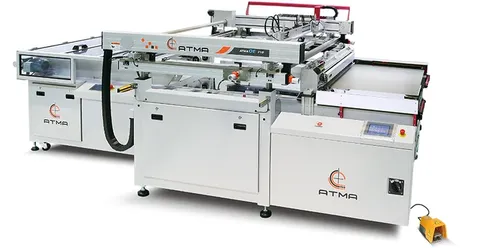
Solar cell screen printing machine
Solar cells and PV glass. Solar manufacturing uses screen printing for fine silver lines on cells and for coatings on module glass. Line width and screen quality drive the result.
- Metallisation lines on cells
- Reflective and decorative layers on PV glass
Silicon wafers and module glass
- Very fine lines
- High-tension screens
- Accurate, repeatable deposit
A typical Sunstar line
These machines are commonly specified together for this job. Sunstar confirms the final line against your material, print size and volume.
All machines →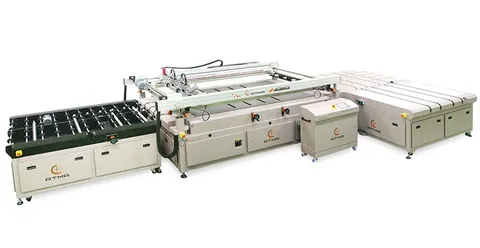
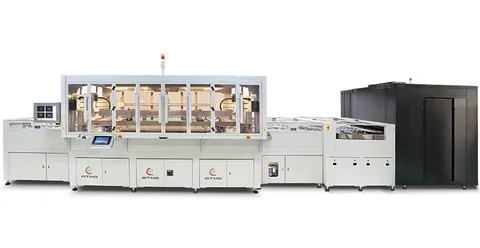
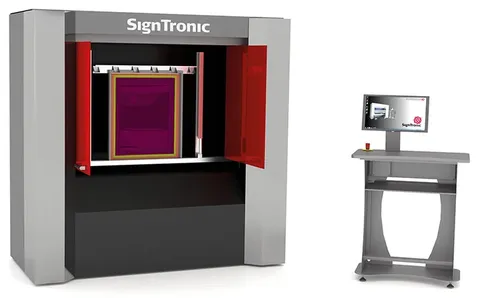
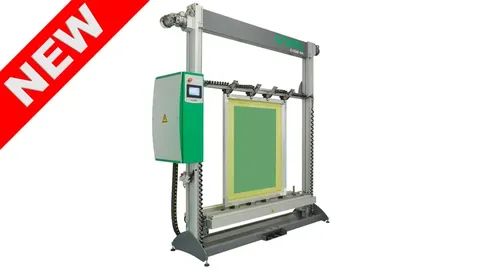
The press is one part of the line. See all printers, pre-press, dryers, handling, squeegees.
From Sunstar Academy
Real footage and short lessons from Sunstar's own channel.
All videos →
How Screen Printing Powers Solar Panels | Solar Cell Manufacturing
How does screen printing technology help manufacture solar cells, and why is it important for India's clean energy future?
Questions buyers ask
Does Sunstar supply screen making for solar?
Yes. Grünig stretching and coating and SignTronic imaging are used where screen quality decides line width.
Also searched as
PV glass printing machine, solar panel screen printing, photovoltaic screen printer, solar cell printing machine, solar printing machine, solar panel printing machine, pv cell screen printer
Machine types for this job
See every model in each class.
Guides
Useful for this job.
All guides →Screen tension in N/cm
Screen tension is the pulling force in the stretched mesh, measured in newtons per centimetre (N/cm) with a tension meter resting on the mesh. Most polyester screens for industrial work run at about 16 to 30 N/cm. The right figure depends on the mesh count and thread diameter, and the mesh maker's data sheet gives it for each mesh.
Read →GuideEmulsion thickness (EOM)
EOM, or emulsion over mesh, is the thickness of emulsion that stands beyond the mesh on the print side of the screen. For fine lines and halftones it is typically 3 to 8 microns, or about 10 to 20 percent of the mesh thickness. EOM is set by how the screen is coated: the number of coats, the side they are applied from, the coating speed and the trough.
Read →Related applications
Touch panels and cover glass
Cover glass gets a printed border in black or white, with windows for cameras and sensors.
See the line →Glass and solarAppliance glass
Refrigerator doors, oven doors and hob tops are printed direct onto glass, edge to edge, before tempering.
See the line →Glass and solar · AutomotiveArchitectural and automotive glass
Architectural panels and automotive glass are printed with ceramic ink: black bands, dot fades and heater lines.
See the line →Inquiry
Tell Sunstar what you print.
An engineer replies within one working day with machine options and Indian pricing. Delivered and installed anywhere in India.