
- Home
- Applications
- Appliance glass
Application · Glass and solar
Glass screen printing machine
Appliance glass: refrigerator, oven and hob. Refrigerator doors, oven doors and hob tops are printed direct onto glass, edge to edge, before tempering. Panels are large and heavy, and the print line feeds the dryer and furnace.
- Refrigerator door glass
- Oven and microwave door glass
- Hob and cooktop glass
Float glass, 3 to 6 mm
- Large-format bed with glass handling
- Edge-to-edge register
- In-line drying before tempering
A typical Sunstar line
These machines are commonly specified together for this job. Sunstar confirms the final line against your material, print size and volume.
All machines →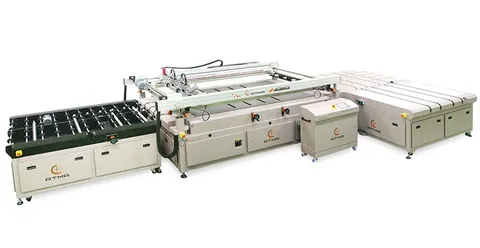
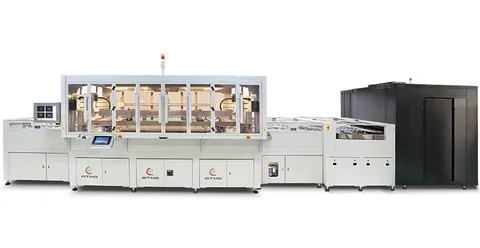
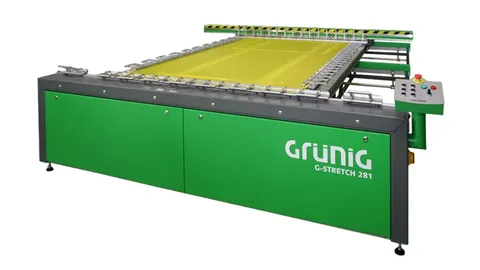
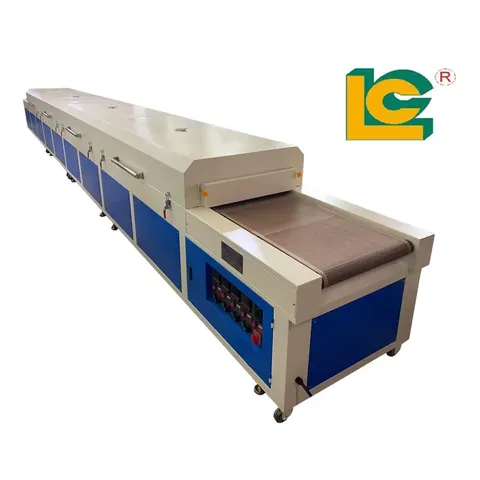
The press is one part of the line. See all printers, pre-press, dryers, handling, squeegees.
From Sunstar Academy
Real footage and short lessons from Sunstar's own channel.
All videos →
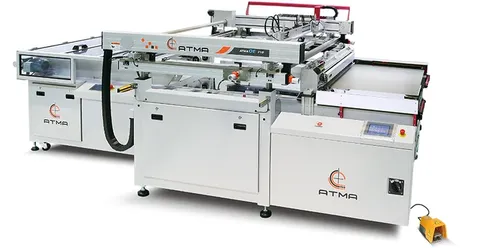
ATMA ATMATIC GS1225 | Automatic Glass Screen Printer
Discover the ATMA ATMATIC GS1225, an advanced automatic screen printing solution designed for high-precision industrial glass printing.
Questions buyers ask
Which machine prints direct on refrigerator glass?
The ATMATIC GS and ATMALINE IG glass lines, which load, register, print and deliver glass panels to the dryer in line.
Also searched as
glass printing machine, direct to glass screen printing, refrigerator glass printing machine, appliance glass printer, oven glass printing machine, hob glass printing machine, white goods glass printing, glass screen printer, flat glass printing machine
Machine types for this job
See every model in each class.
Fully automatic flatbeds, cylinder presses and reel-fed printers
An automatic screen printing machine feeds the sheet, registers it, prints it and delivers it to the dryer without an operator handling each piece.
See models →Machine typeFeeder, press, dryer and stacker specified together as one line
An automatic screen printing line joins the machines around the press so that sheets move through without being carried by hand.
See models →Machine typeAutomatic emulsion coating to the same thickness on every screen
A screen coating machine applies photo emulsion to the stretched mesh.
See models →Guides
Useful for this job.
All guides →How to choose an industrial screen printing machine
Five facts about your job decide the machine: the material and its thickness, the print size, the output you need per hour, the register tolerance and the ink. With these in hand, the choice between a flatbed, a cylinder press, a roll-to-roll press or a purpose-built printer is usually clear.
Read →GuideScreen printing vs digital printing for industrial parts
Screen printing is the better process for volume production, for thick or opaque ink films and for functional inks such as silver, carbon and glass enamel. Digital printing is better for short runs, many design versions and variable data. It is common to use digital for samples and screen printing for production.
Read →Related applications
Touch panels and cover glass
Cover glass gets a printed border in black or white, with windows for cameras and sensors.
See the line →Glass and solar · AutomotiveArchitectural and automotive glass
Architectural panels and automotive glass are printed with ceramic ink: black bands, dot fades and heater lines.
See the line →Glass and solarSolar cells and PV glass
Solar manufacturing uses screen printing for fine silver lines on cells and for coatings on module glass.
See the line →Inquiry
Tell Sunstar what you print.
An engineer replies within one working day with machine options and Indian pricing. Delivered and installed anywhere in India.