How the two processes differ
In screen printing, a squeegee pushes ink through a mesh stencil onto the part. Each colour or layer needs its own screen. The mesh and the stencil set how much ink goes down, so the ink film can be made thin or thick as the job needs.
In digital printing, inkjet heads place very small drops of ink straight from the file. There is no screen to make. The ink has to be thin enough, and its particles small enough, to pass through the nozzles. Most industrial inkjet printers use UV-cured inks.
Screen and digital compared
| Screen printing | Digital (inkjet) printing | |
|---|---|---|
| Setup | One screen for each colour or layer | No screens. Prints from the file |
| Cost per piece | Falls as the run gets longer | About the same at any quantity |
| Ink film | Thick. Typically 5 to 30 microns in one pass, more with coarse mesh | Thin. Built up with extra passes |
| Ink types | UV, solvent, conductive, dielectric, ceramic, adhesive, texture | Inks made for the print head, mainly colour inks |
| Colour | Mixed spot colours, opaque white, metallics | Process colour from a fixed ink set |
| Variable data | The same image on every sheet | Every piece can be different |
Where screen printing is the right process
Screen printing is the right process for the work listed below. The ink film depends on the mesh and the ink, so check the ink maker's data sheet for the recommended mesh and deposit.
- Functional layers: silver and carbon circuits, dielectric, printed heaters and sensors, which need a thick and even film
- Opaque white and dense black on clear polycarbonate and polyester, for backlit dials and overlays
- Solid bands and borders of glass enamel on appliance and automotive glass at production speed
- Texture, hard coat, spot UV and printed adhesive
- Long runs of the same part, such as decals, labels and nameplates
- Brand colours matched with a mixed spot colour, and prints that have to last outdoors
Where digital printing is the right process
Digital printing has no screen to make, so a new design can go to print very quickly. The cost per piece stays about the same, so the advantage fades as the quantity rises. It suits:
- Prototypes and samples, before screens are made
- Short runs and many versions of one design
- Serial numbers, barcodes and other variable data
- Photographic images with many colours in one pass
Using both in one plant
The two processes are often combined. A nameplate maker may screen print the solid colours and the protective coat, then add a serial number digitally. A membrane switch maker may proof an overlay digitally and screen print the production run.
The quantity at which screen printing becomes cheaper depends on the part, the number of colours and the ink. Work it out from the screen cost, the setup time and the ink cost per piece.
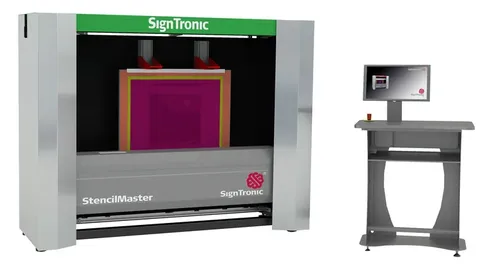
Computer-to-screen (CTS) imaging also shortens screen printing setup. The screen is imaged straight from the file without a film positive, so a new job reaches the press sooner.
What Sunstar supplies
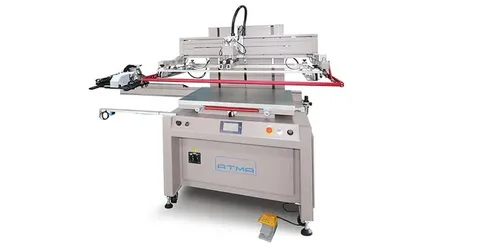
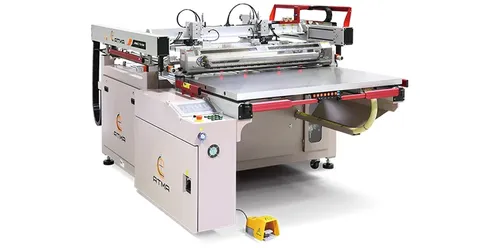
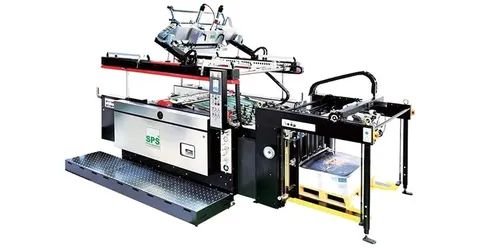
Sunstar Graphics supplies industrial screen printing machinery in India: ATMA flatbed and application-specific printers, SPS stop-cylinder presses, Lingtie roll-to-roll presses, Grünig screen making machines, SignTronic CTS systems, Luen Cheong IR and UV dryers and RKS squeegees. Sunstar is the exclusive distributor for these brands and also supplies Kuroki squeegees from Taiwan. It installs, trains and services from Mumbai, across India.
If your parts need thick, opaque or functional ink films in volume, send an enquiry with your material, print size and output per hour. Sunstar replies within one working day, and you can ask for machine options and Indian pricing.