
04 · Material handling
Feeders, stackers and converting: automating the line around the press
A screen printing press prints. Everything else in the line moves material: a feeder puts sheets onto the press one at a time, a conveyor carries them through the dryer, a stacker takes them off at the end, and converting units cut, slit or rewind the printed material. When these steps are done by hand, they set the speed of the whole line and the number of people on it.
Sunstar Graphics supplies feeders, stackers and converting units as part of automatic screen printing lines from ATMA, SPS and Lingtie, and installs and services the complete line from Mumbai. This page explains how automatic sheet handling works, what to check before adding it, and the four kinds of handling equipment.
How it works
- Pile and separate
Sheets sit on a pile table that rises as the pile goes down. Air blows between the top sheets to separate them, and suckers lift the top sheet without taking the one below.
- Feed and register
The sheet travels down a feed board to the press and is located against front and side stops, or read by a camera that corrects its position. The press then holds it on vacuum or grips it on the cylinder.
- Print and convey
The press prints and the sheet is carried straight onto the dryer belt, so nobody touches the wet print.
- Dry and stack
After the cooling zone the sheet is lifted off the belt and laid onto a pile on the stacker, which lowers as the pile grows and jogs the sheets square.
- Convert
Printed sheets or webs go on to be cut to size, slit, die-cut or rewound, by hand or on a cutter or rewinder matched to the job.
How to choose
What to settle before asking for a quotation.
Buying guides →Sheet size, weight and material
Feeders and stackers are built for a range of sheet sizes and thicknesses. Thin films, static-prone plastics and heavy board each need their own settings and sometimes a different feeder type.
Press speed
The feeder must keep up with the press and the stacker with the dryer. Give the press output per hour so the handling is sized for it.
Floor length
A press with feeder, dryer and stacker is a long line. Measure the floor and the route in before choosing the configuration.
Where the time goes now
Watch the line for a shift. If the operator spends more time loading and unloading than the press spends printing, a feeder or a stacker is the first thing to add.
Sheet feeders
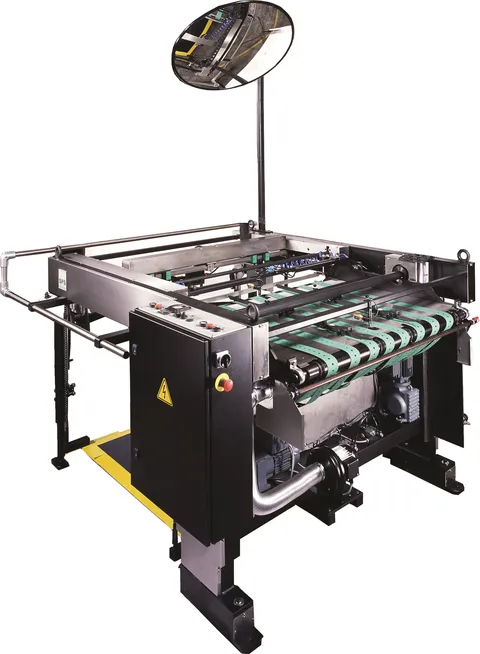
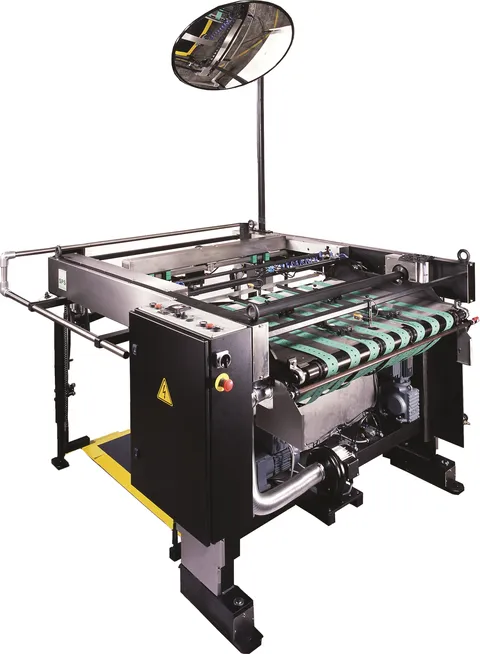
Pile feeders that separate and feed sheets to the press in register, so the press runs without an operator loading.
All 13 models →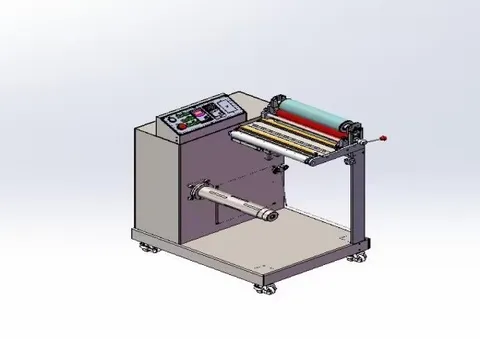
Stackers and take-off units
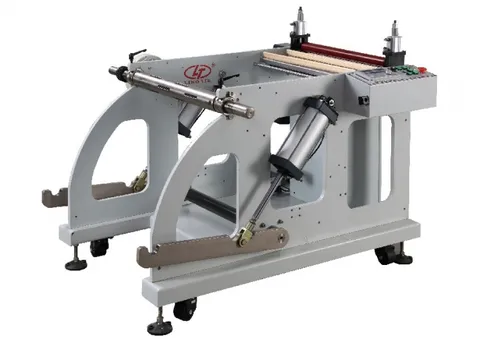
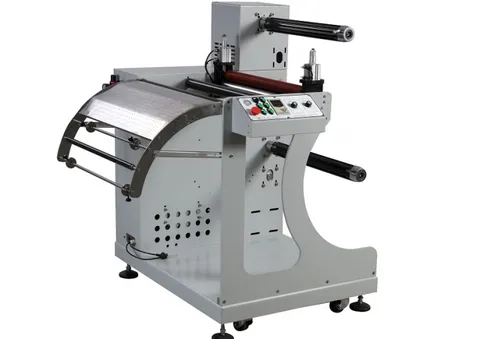
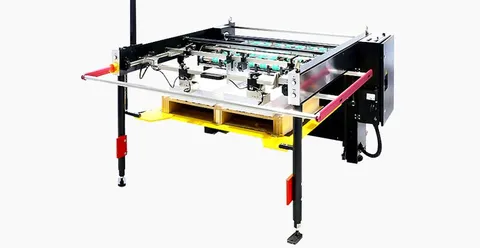
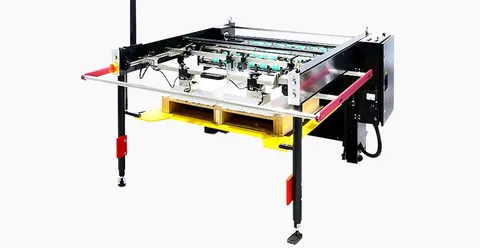
Units that lift dried sheets off the conveyor and stack them square, so nobody handles the print.
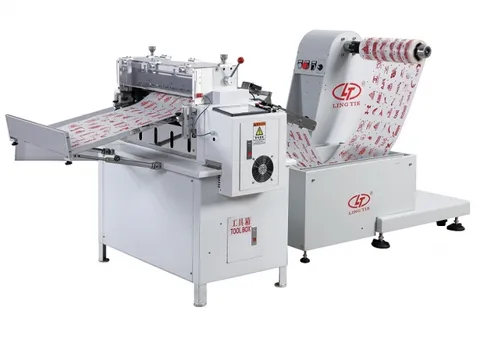
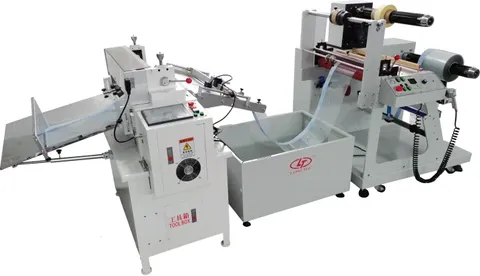
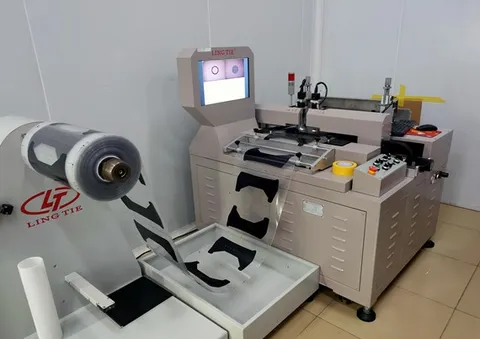
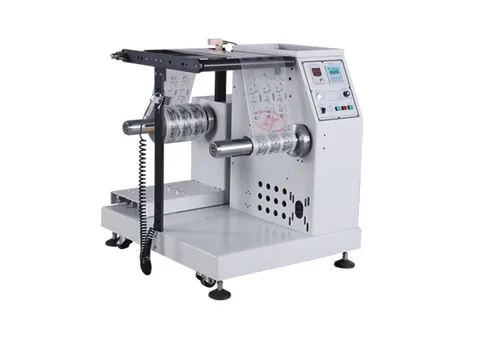
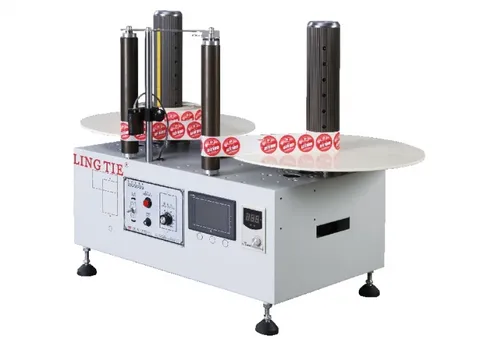
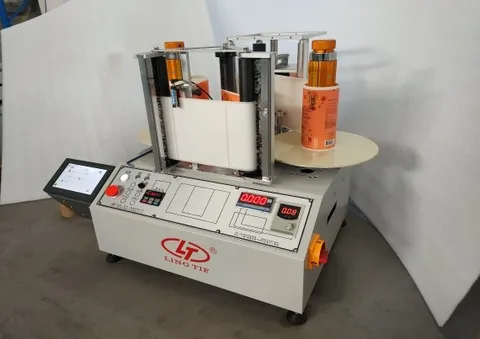
Cutters and converting
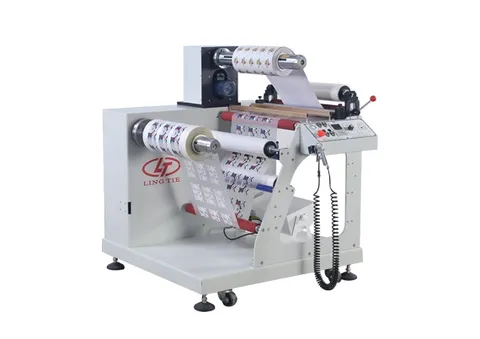
Sheeters, slitters and rewinders that cut or rewind printed material to the finished size.
All 6 models →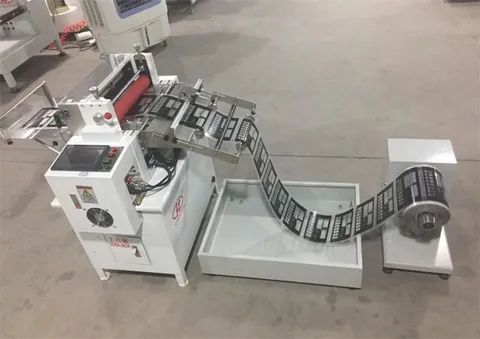
Other handling
Conveyors, turnover units and loading tables that connect the press to the rest of the line.
All 26 models →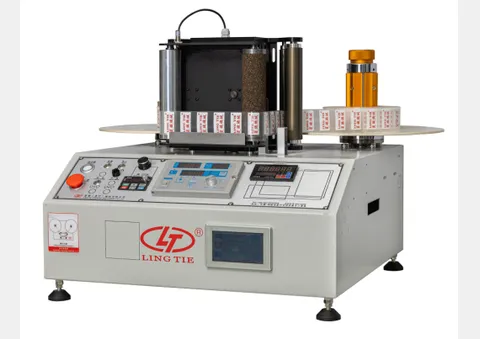
Machine types in this category
Each page explains one class of machine and lists its models.
Guides
Written for the person choosing the machine.
All guides →Flatbed vs cylinder screen printing machine
Choose a flatbed if you print rigid or thick material, or mixed jobs in short and medium runs at around 500 sheets an hour. Choose a stop-cylinder press if you print thin flexible sheets in long runs and need 1,800 to 4,000 sheets an hour. Many plants run both.
Read →GuideSemi-automatic vs fully automatic screen printing machine
A semi-automatic screen printing machine prints by itself, but an operator loads and removes each sheet. A fully automatic machine also feeds, registers and delivers the sheet to the dryer. Semi-automatic suits short runs and many job changes. Fully automatic suits steady volume, where output and consistency repay the higher cost.
Read →GuideHow to choose an industrial screen printing machine
Five facts about your job decide the machine: the material and its thickness, the print size, the output you need per hour, the register tolerance and the ink. With these in hand, the choice between a flatbed, a cylinder press, a roll-to-roll press or a purpose-built printer is usually clear.
Read →GuideImported vs Indian screen printing machine
A lower-cost Indian-made screen printing machine is a sensible choice for simple graphics, wide tolerances, short runs and a tight budget. A precision imported press earns its cost on multi-layer and functional work, tight register and high volume, where rejects are expensive. The tolerance of your part and the cost of a rejected sheet decide it.
Read →GuideScreen printing vs digital printing for industrial parts
Screen printing is the better process for volume production, for thick or opaque ink films and for functional inks such as silver, carbon and glass enamel. Digital printing is better for short runs, many design versions and variable data. It is common to use digital for samples and screen printing for production.
Read →GuideHow membrane switches are made
A membrane switch is made by screen printing a graphic overlay and one or two circuit layers on plastic film, then cutting them and laminating them with a spacer and adhesive. The circuit is printed in silver and carbon ink, with a dielectric layer for insulation. Each printed layer is dried or cured before the next, and each has to register to the others.
Read →Other categories: Printers, Pre-press and screen making, Dryers and curing, Squeegees and tools. See the process stage by stage or start from what you print.
From Sunstar Academy
Real footage and short lessons from Sunstar's own channel.
All videos →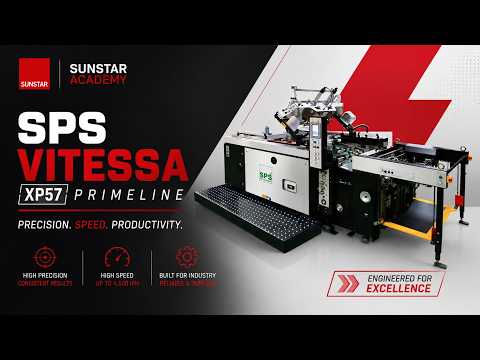
VITESSA XP57: Print. Dry. Stack.
Printing is only half the process. The SPS VITESSA XP57 primeline takes production further with an inline drying workflowmoving sheets continuously from printing to…
Questions buyers ask
What is an automatic screen printing line?
A press with a feeder in front, a conveyor dryer behind and a stacker at the end, so sheets are fed, printed, dried and stacked without being handled.
Can a feeder and stacker be added to an existing press?
Often, yes, if the press was built for it and there is floor space. Send the press model and Sunstar will confirm what fits.
How many sheets per hour can an automatic line run?
An automatic flatbed line runs faster than the 500 sheets an hour of a semi-automatic press; a stop-cylinder line runs 1,800 to 4,000 an hour, dryer and stacker included.
Does Sunstar supply converting equipment?
Sunstar supplies cutters and converting units with the lines it installs. Send an enquiry with the material and finished size.
Inquiry
Tell Sunstar what you print.
An engineer replies within one working day with the right type and model, and Indian pricing. Delivered and installed anywhere in India.