
- Home
- Applications
- Dials and clusters
Application · Automotive
Speedometer dial printing machine
Speedometer dials and instrument clusters. Dials and instrument cluster appliqués are printed in six to twelve layers on polycarbonate. Every layer has to register to the last, and backlit areas need an even ink film.
- Speedometer and tachometer dials
- Cluster appliqués with dead-front icons
- Two-wheeler and tractor dials
Polycarbonate and PMMA sheet, 0.25 to 0.5 mm
- Register held across every colour
- Even ink deposit on backlit areas
- Fine scale lines and small text
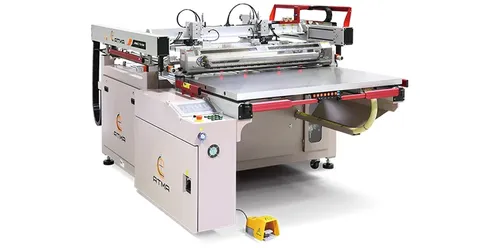
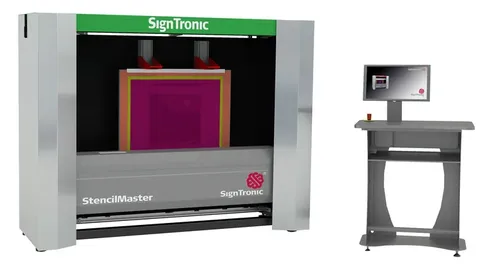
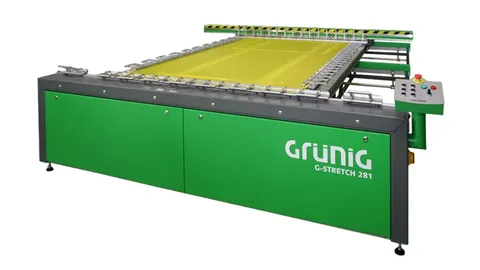
A typical Sunstar line
These machines are commonly specified together for this job. Sunstar confirms the final line against your material, print size and volume.
All machines →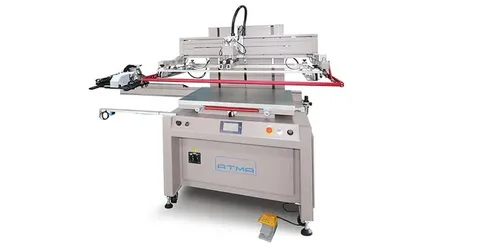
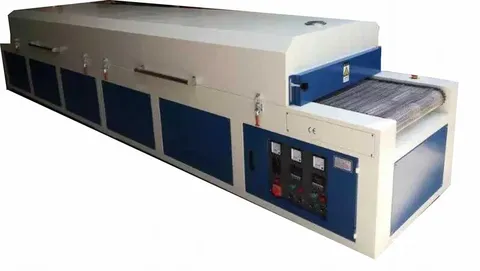
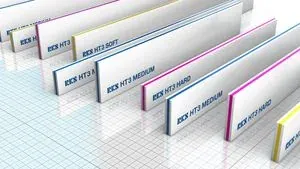
The press is one part of the line. See all printers, pre-press, dryers, handling, squeegees.
Questions buyers ask
Which machine prints speedometer dials?
A flatbed screen printer with a vacuum bed and accurate register, such as the ATMA AT-80P/SV or the automatic ATMACE series.
How many colours can a dial have?
Dials are usually printed in six to twelve passes. Each pass is one colour or one functional layer, dried before the next.
Also searched as
dial printing machine, instrument cluster printing, automotive dial screen printer, appliqué printing, speedometer printing machine, meter dial printing machine, automotive dial printing machine, cluster dial printing, dashboard graphics printing
Machine types for this job
See every model in each class.
Fully automatic flatbeds, cylinder presses and reel-fed printers
An automatic screen printing machine feeds the sheet, registers it, prints it and delivers it to the dryer without an operator handling each piece.
See models →Machine typeOperator-fed electric flatbeds and precision part printers
A semi-automatic screen printing machine prints each sheet by motor while an operator loads and unloads it.
See models →Machine typeFlat bed presses for rigid and flexible sheets up to 25 mm thick
A flatbed screen printing machine holds the sheet flat on a vacuum bed.
See models →Machine typePneumatic mesh stretching to a set, repeatable tension
A screen stretching machine pulls the mesh to a set tension in both directions and holds it while the mesh is glued to the frame.
See models →Machine typeAutomatic emulsion coating to the same thickness on every screen
A screen coating machine applies photo emulsion to the stretched mesh.
See models →Machine typeFilm-free imaging: artwork goes from the file to the screen
A computer to screen machine, or CTS, writes the artwork onto the coated screen with UV light, straight from the file.
See models →Guides
Useful for this job.
All guides →Semi-automatic vs fully automatic screen printing machine
A semi-automatic screen printing machine prints by itself, but an operator loads and removes each sheet. A fully automatic machine also feeds, registers and delivers the sheet to the dryer. Semi-automatic suits short runs and many job changes. Fully automatic suits steady volume, where output and consistency repay the higher cost.
Read →GuideImported vs Indian screen printing machine
A lower-cost Indian-made screen printing machine is a sensible choice for simple graphics, wide tolerances, short runs and a tight budget. A precision imported press earns its cost on multi-layer and functional work, tight register and high volume, where rejects are expensive. The tolerance of your part and the cost of a rejected sheet decide it.
Read →GuideFine-line screen printing on polycarbonate
Fine lines on polycarbonate need four things to be right together: a fine mesh at high tension, a thin and flat stencil with a sharp image, a sharp squeegee at low pressure, and a clean, flat sheet free of static. Lines of around 100 to 150 microns are typically achievable on a well set flatbed press. Finer lines need closer control of every step.
Read →GuideScreen tension in N/cm
Screen tension is the pulling force in the stretched mesh, measured in newtons per centimetre (N/cm) with a tension meter resting on the mesh. Most polyester screens for industrial work run at about 16 to 30 N/cm. The right figure depends on the mesh count and thread diameter, and the mesh maker's data sheet gives it for each mesh.
Read →GuideOff-contact and snap-off
Off-contact distance, also called snap-off, is the gap between the underside of the screen and the substrate before the squeegee presses the mesh down. On a well-tensioned screen it is typically 1 to 3 mm for small frames and 3 to 8 mm for large frames. Use the smallest gap that lets the mesh lift cleanly behind the squeegee.
Read →GuideRegistration problems in multicolour printing
Registration problems in multicolour screen printing come from four places: the screens, the substrate, the press and the artwork. Look at how the error behaves before changing anything. A constant error is a setup fault. A random error is a feeding fault. An error that grows across the sheet is a change of size in the screen or the substrate.
Read →Related applications
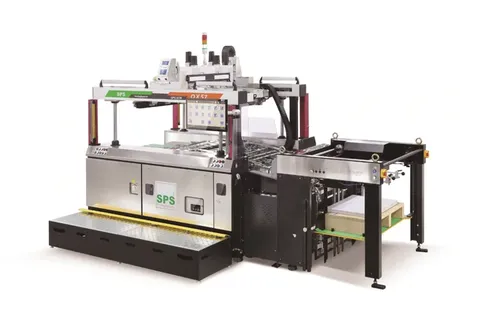
IMD / in-mould decoration
IMD films are screen printed flat, then formed and back-moulded into a plastic part.
See the line →Automotive · Labels, nameplates and packaging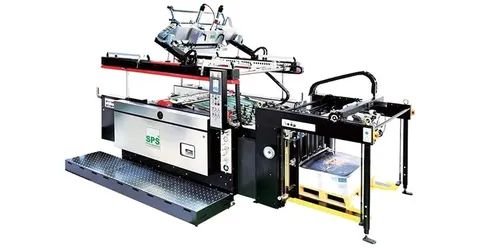
Vehicle decals and graphics
Two-wheeler and vehicle graphics are printed in long runs on self-adhesive vinyl, in several colours plus a clear coat.
See the line →Automotive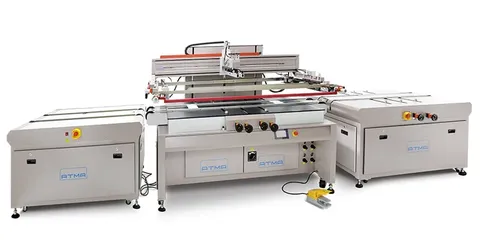
Gaskets
Gaskets get a printed sealing bead or coating in silicone or elastomer.
See the line →Inquiry
Tell Sunstar what you print.
An engineer replies within one working day with machine options and Indian pricing. Delivered and installed anywhere in India.