
02 · Screen making
Pre-press screen making machines: the steps, what to check, the range
Print quality is decided before the press, in the screen room. Mesh is stretched to tension on the frame, coated with emulsion to a set thickness, imaged with the artwork, developed, dried and checked. After the job the screen is washed, decoated and prepared for the next one. Each of these steps has a machine, and a screen that is wrong at any step prints wrong on every sheet.
Sunstar Graphics is the exclusive distributor in India for Grünig stretching, coating, washing and drying machines from Switzerland and SignTronic computer to screen (CTS) imaging systems from Switzerland, and also supplies ATMA screen making units. This page explains the process first, then what to check before buying, then the nine kinds of pre-press equipment in the range.
How it works
- Stretch
The mesh is pulled to a set tension, measured in N/cm, and glued to the frame. Even tension across the screen is what keeps register and gives a clean snap-off. A stretching machine does this with pneumatic or mechanical clamps, repeatably.
- Coat
Emulsion is applied to the mesh with a trough. The thickness of emulsion over the mesh (EOM) sets the ink film and the edge definition. A coating machine applies the same number of passes at the same speed and angle every time.
- Image
The artwork is put onto the coated screen, either by exposing through a film positive in an exposure unit or by writing it directly onto the emulsion with a computer to screen system, with no film at all.
- Develop and wash out
Water washes away the emulsion that was not hardened, opening the image in the stencil. A developing machine does this with controlled nozzles and water, so fine lines open cleanly.
- Dry and check
The stencil is dried in a dust-free cabinet at a set temperature and inspected before it goes to the press.
- Reclaim
After printing, the screen is washed of ink, the stencil is decoated, and the frame is cleaned and degreased so the mesh can be coated again. Washing machines keep the solvent and water closed in, which protects the operator and cuts the cost of chemicals.
See the machines work
Animated models of the machines in this category, one cycle each. Press play.
All films →How to choose
What to settle before asking for a quotation.
Buying guides →Screen size
Measure the largest frame you use, outside dimensions, and the smallest. Every pre-press machine is sized by frame, and a frame that does not fit cannot be processed.
Screens per day
Count how many screens you stretch, coat, image and reclaim in a day. A few screens a day are done by hand or on manual units; dozens need automatic machines, and the busiest step sets the pace.
Mesh and detail
Fine mesh counts, high tension and fine lines (membrane switches, electronics, dials) need an accurate stretcher, an automatic coater and CTS imaging. Coarse work needs less.
Film or CTS
If you still make film positives, compare the cost and time of film against a computer to screen system, which images straight from the file and removes film, registration of film to screen and most pinholes.
Water, chemicals, space
Washing and developing need a water supply and drainage, and a place for used chemicals. Check the room, the ventilation and the floor load before choosing the machine size.
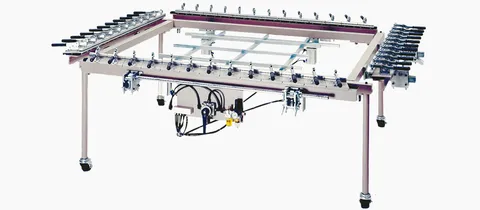
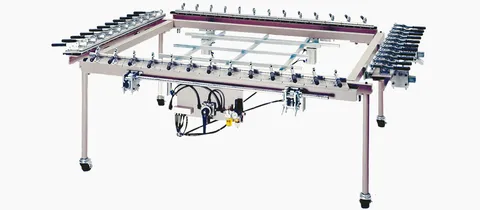
Screen stretching machines
Pneumatic and mechanical stretchers that pull mesh to a set tension and hold it while the frame is glued, from one frame to large-format and automatic units.
All 15 models →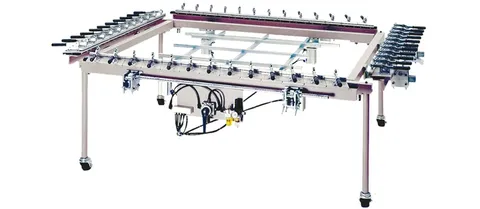
Screen coating machines
Automatic emulsion coaters that apply the same EOM on every screen, with trough and spatula accessories.
All 11 models →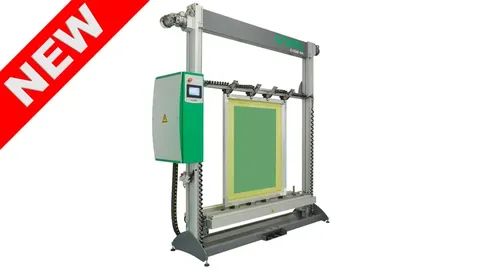
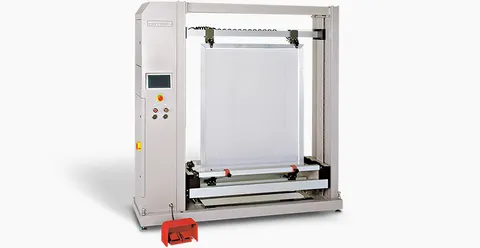
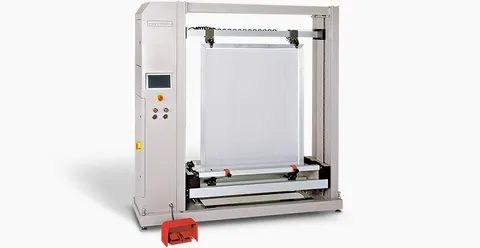
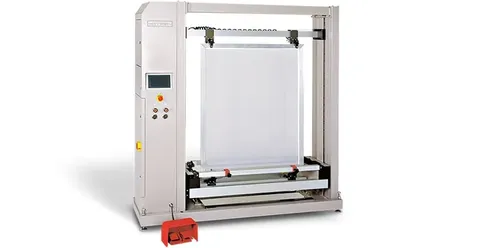
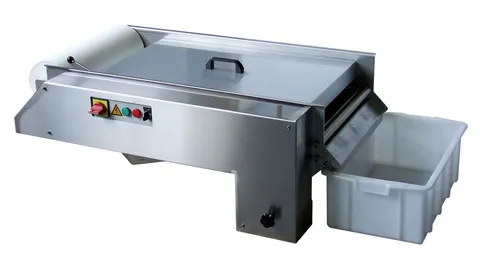
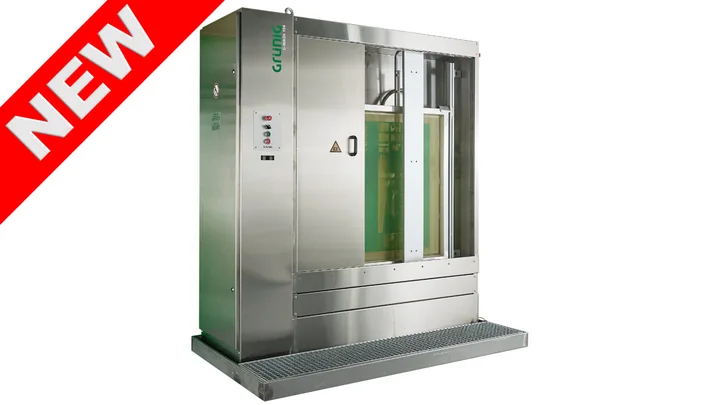
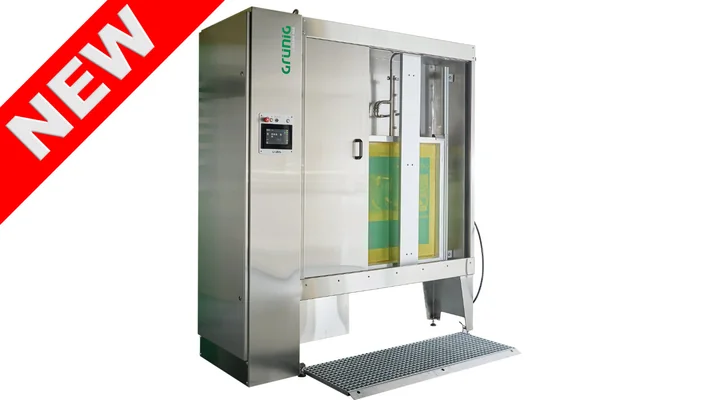
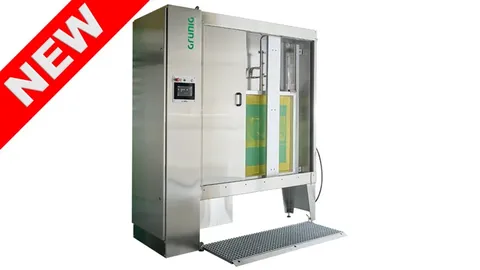
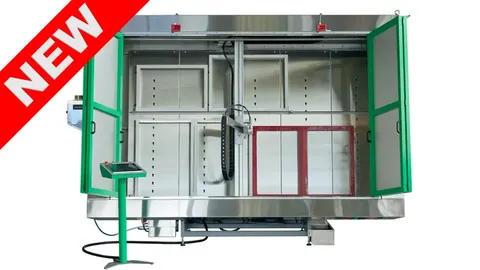
Screen washing machines
Closed cabinets that wash ink from screens with solvent, with filtering and recycling of the washing liquid.
All 12 models →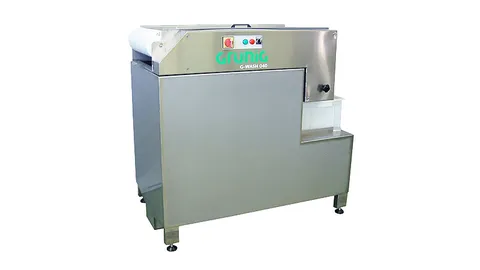
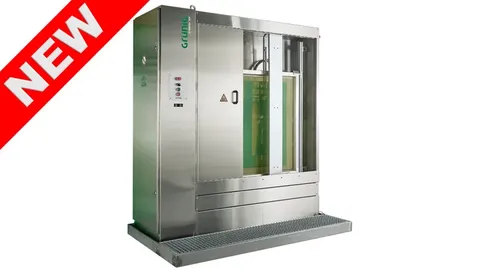
Developing and decoating machines
Water washout units that open the stencil after exposure, and decoating units that strip the old stencil for reuse.
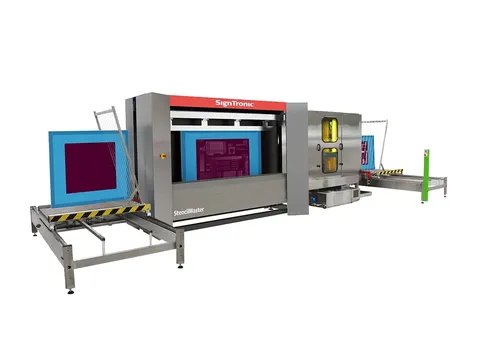
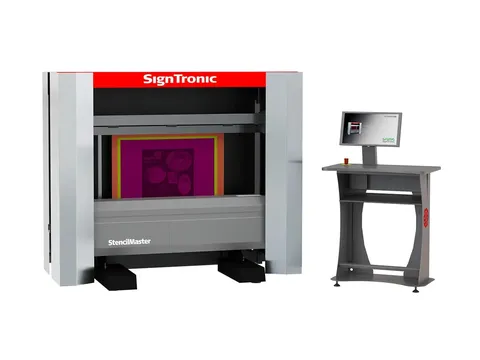
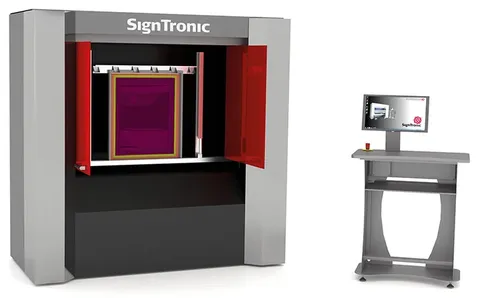
Computer to screen (CTS) systems
Imaging units that write the artwork straight onto the coated screen with UV light, so no film positive is needed.
All 7 models →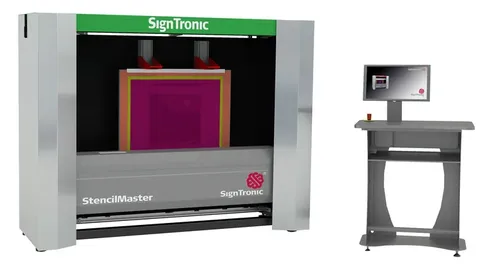
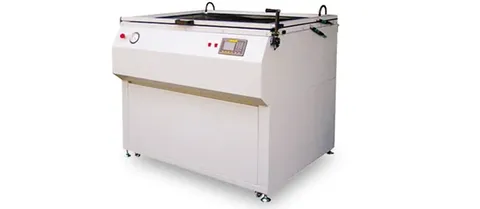
Exposure units
UV units that harden the emulsion through a film positive, with vacuum frames to hold film and screen in contact.
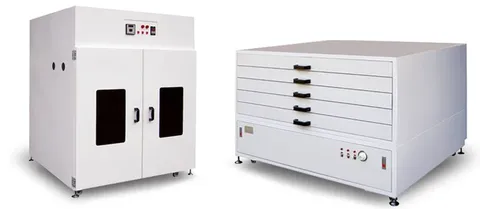
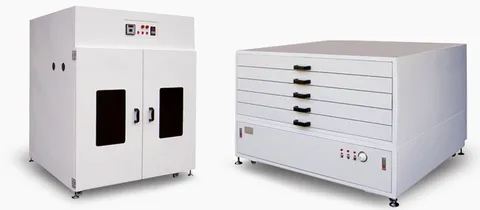
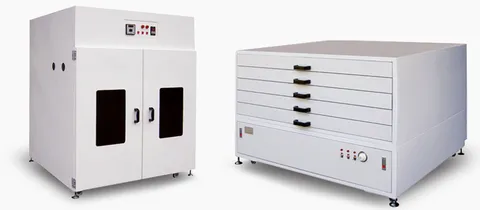
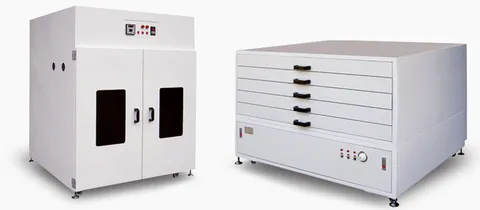
Screen drying cabinets
Dust-free horizontal and vertical cabinets that dry coated and developed screens at a set temperature.
All 7 models →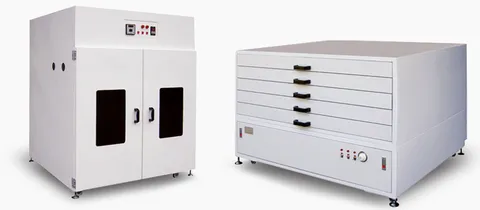
Frame preparation
Units that clean, degrease and prepare frames for stretching and for the next coat.
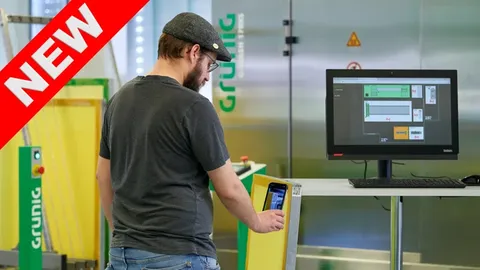
Screen room automation
Magazines, handling and software that move screens between machines and log the process.
All 9 models →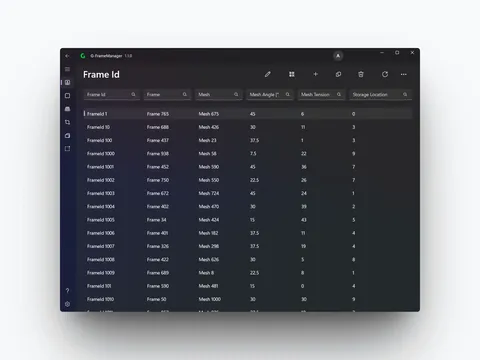
Machine types in this category
Each page explains one class of machine and lists its models.
Pneumatic mesh stretching to a set, repeatable tension
A screen stretching machine pulls the mesh to a set tension in both directions and holds it while the mesh is glued to the frame.
See models →Machine typeAutomatic emulsion coating to the same thickness on every screen
A screen coating machine applies photo emulsion to the stretched mesh.
See models →Machine typeWashing, developing, decoating and reclaiming screens by machine
A screen washing machine cleans the screen with spray nozzles inside a closed cabinet.
See models →Machine typeFilm-free imaging: artwork goes from the file to the screen
A computer to screen machine, or CTS, writes the artwork onto the coated screen with UV light, straight from the file.
See models →Guides
Written for the person choosing the machine.
All guides →Screen printing vs digital printing for industrial parts
Screen printing is the better process for volume production, for thick or opaque ink films and for functional inks such as silver, carbon and glass enamel. Digital printing is better for short runs, many design versions and variable data. It is common to use digital for samples and screen printing for production.
Read →GuideHow membrane switches are made
A membrane switch is made by screen printing a graphic overlay and one or two circuit layers on plastic film, then cutting them and laminating them with a spacer and adhesive. The circuit is printed in silver and carbon ink, with a dielectric layer for insulation. Each printed layer is dried or cured before the next, and each has to register to the others.
Read →GuideHow glucose test strips are screen printed
A glucose test strip is made by screen printing carbon and silver electrodes on plastic film, printing an insulation layer that leaves a small electrode area open, and adding the enzyme reagent. Many strips are printed side by side on one sheet or along a reel, then covered and cut apart. The electrode area sets the reading, so line width, ink deposit and register are held tightly.
Read →GuideFine-line screen printing on polycarbonate
Fine lines on polycarbonate need four things to be right together: a fine mesh at high tension, a thin and flat stencil with a sharp image, a sharp squeegee at low pressure, and a clean, flat sheet free of static. Lines of around 100 to 150 microns are typically achievable on a well set flatbed press. Finer lines need closer control of every step.
Read →GuideScreen tension in N/cm
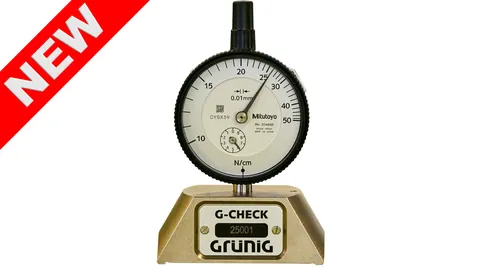
Screen tension is the pulling force in the stretched mesh, measured in newtons per centimetre (N/cm) with a tension meter resting on the mesh. Most polyester screens for industrial work run at about 16 to 30 N/cm. The right figure depends on the mesh count and thread diameter, and the mesh maker's data sheet gives it for each mesh.
Read →GuideOff-contact and snap-off
Off-contact distance, also called snap-off, is the gap between the underside of the screen and the substrate before the squeegee presses the mesh down. On a well-tensioned screen it is typically 1 to 3 mm for small frames and 3 to 8 mm for large frames. Use the smallest gap that lets the mesh lift cleanly behind the squeegee.
Read →Other categories: Printers, Dryers and curing, Feeders, stackers and converting, Squeegees and tools. See the process stage by stage or start from what you print.
From Sunstar Academy
Real footage and short lessons from Sunstar's own channel.
All videos →
ATMA A211 Pneumatic Screen Stretching System
Discover the ATMA A211 Pneumatic Screen Stretching System, designed for consistent screen tension, faster setup, and reliable screen preparation for professional screen…
Questions buyers ask
What equipment is needed for screen making?
A stretching machine, a coating machine, an exposure unit or computer to screen system, a developing or washout unit, a drying cabinet and a washing machine for reclaiming. Small shops do some steps by hand.
What is a computer to screen machine?
A CTS system images the artwork directly onto the coated screen from the file, using UV light, with no film positive. It saves film, removes film-to-screen registration and gives a sharper stencil.
What screen tension is needed for screen printing?
It depends on the mesh and the job; typical industrial values are in the range of 20 to 30 N/cm, and fine work runs at the higher end. Measure every screen with a tension meter and check the mesh maker's data.
Which Grünig machines does Sunstar supply in India?
Grünig G-STRETCH stretching, G-COAT coating, G-WASH washing, developing and decoating, G-DRY drying cabinets and G-PREP frame preparation, with installation, training and service from Mumbai.
Inquiry
Tell Sunstar what you print.
An engineer replies within one working day with the right type and model, and Indian pricing. Delivered and installed anywhere in India.