
03 · Curing
Dryers and UV curing machines for screen printing: how they work, how to choose
After the press the ink is wet. It has to be dried or cured before the sheet can be stacked, printed again or finished. Solvent and water-based inks dry when the liquid in them leaves; heat and moving air speed this up. Plastisol fuses with heat. UV ink does not dry at all; it cures in seconds when UV light of the right dose reaches it. The dryer has to match the ink, the material and the speed of the press in front of it.
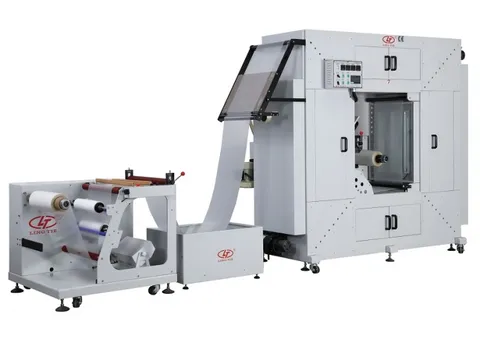
Sunstar Graphics is the exclusive distributor in India for Luen Cheong conveyor dryers from Hong Kong: IR hot-air drying tunnels, UV drying machines and combined IR and UV ovens. This page explains how a conveyor dryer works, what to check before buying, and the three types in the range. Dryers are matched to a press, so send the press model with the enquiry.
How it works
- Feed
The printed sheet goes from the press take-off onto the dryer belt, by hand, by conveyor or straight from a cylinder press. The belt width is matched to the sheet.
- Heat or irradiate
In an IR hot-air tunnel, infrared lamps heat the ink and the material while hot air moves across the surface and carries the solvent or water away. In a UV curing machine, UV lamps above the belt deliver a dose of UV energy, measured in mJ/cm2, that cures the ink film in seconds.
- Hold
The belt speed and the tunnel length set how long the sheet is under heat or light. A longer tunnel or a slower belt gives more time. The temperature or the UV dose is set for the ink; the ink maker's data sheet gives the figure.
- Extract
Solvent vapour and hot air are extracted from the tunnel and vented, which keeps the shop air clean and the drying even. UV units extract the ozone and heat from the lamps.
- Cool and stack
A cooling zone at the exit brings the sheet back to room temperature so it can be stacked or printed again without the sheets sticking or distorting. A stacker or operator takes the sheets off.
See the machines work
Animated models of the machines in this category, one cycle each. Press play.
All films →How to choose
What to settle before asking for a quotation.
Buying guides →Ink type
Solvent and water-based inks need IR and hot air. Plastisol needs heat to fuse. UV ink needs a UV curing machine. Shops that run both need a combined IR and UV oven or two dryers. Check the ink data sheet for the drying temperature or the UV dose.
Press speed and sheet size
The dryer must take sheets as fast as the press delivers them. Give the press output per hour and the largest sheet; the belt width and the tunnel length follow from these.
Material
Thin films, PVC and some plastics distort at the temperatures that dry thick inks on board or metal. Say what you print so the heat and the cooling zone are sized for it.
Space and services
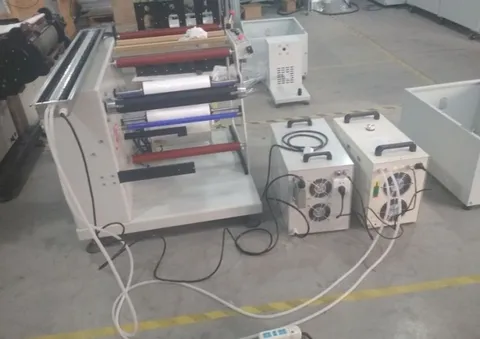
A conveyor dryer is long: the LC-SD series runs from the 2000 to the 10000 and the length is part of the model name. Measure the floor, and check the power supply and the exhaust route.
Running cost
Lamps, belts and extraction use power and need replacing. Ask about lamp life, belt material and how the temperature and UV dose are monitored on the machine.
IR hot-air conveyor dryers
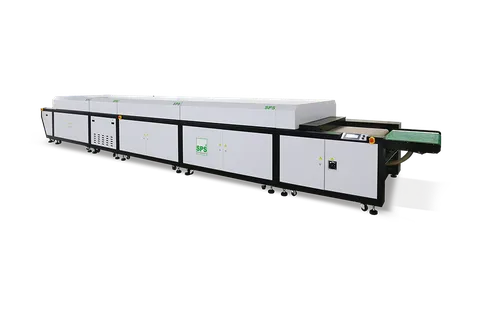
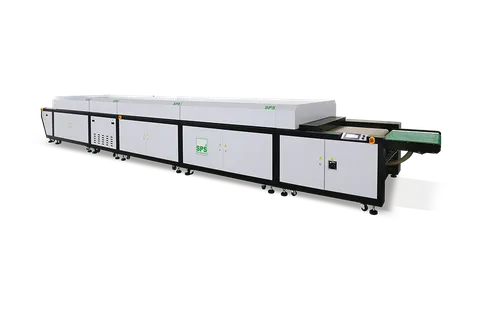
Infrared lamps and moving hot air dry solvent, water-based and plastisol inks on a belt, in tunnel lengths from the LC-SD 2000 to the LC-SD 10000.
All 34 models →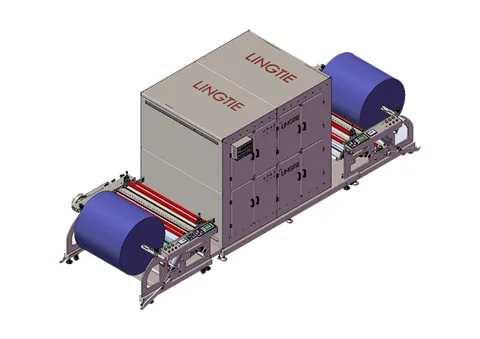
UV curing machines
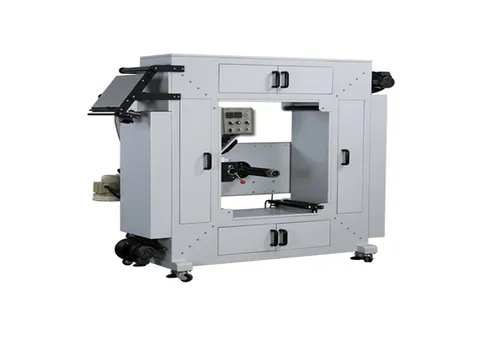
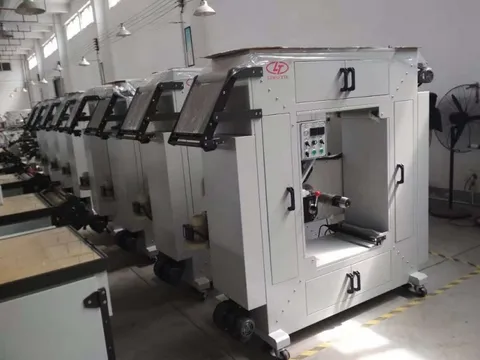
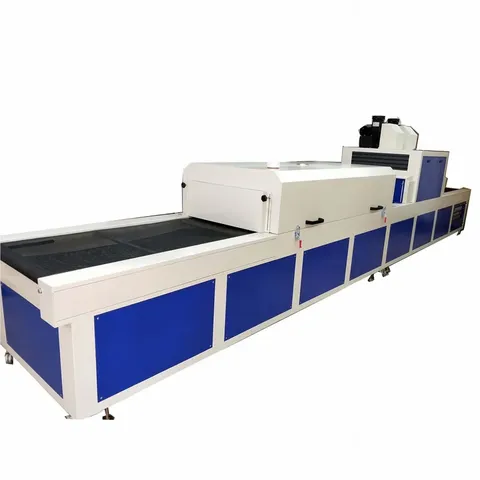
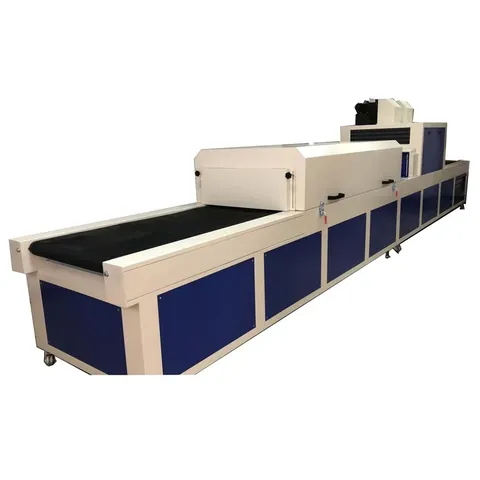
UV lamps over a conveyor belt cure UV inks and coatings in seconds, from the TM-200 to the TM-1200.
All 30 models →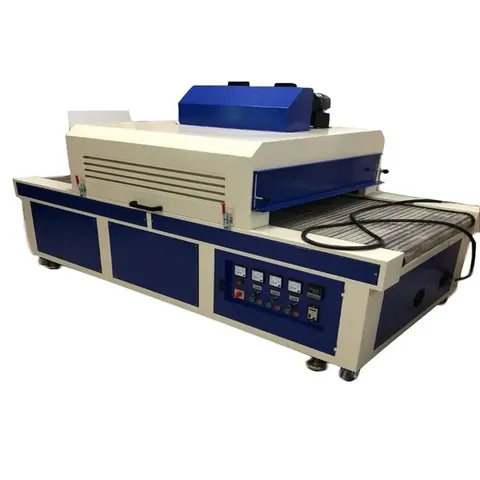
Combined IR + UV ovens
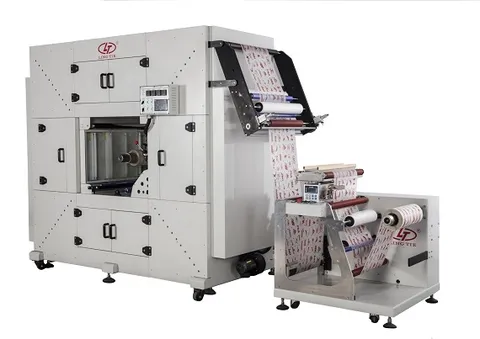
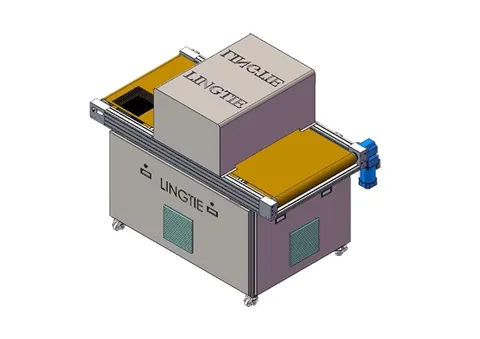
One tunnel with IR hot-air and UV sections, for shops that run both ink types or need to warm the ink before curing.
Machine types in this category
Each page explains one class of machine and lists its models.
UV conveyor dryers that cure UV inks in seconds after the press
A UV curing machine for screen printing is a conveyor that carries the printed sheet under UV lamps.
See models →Machine typeInfrared hot-air tunnels for solvent, water-based and conductive inks
An IR hot-air conveyor dryer carries the printed sheet on a belt through a heated tunnel.
See models →Guides
Written for the person choosing the machine.
All guides →How membrane switches are made
A membrane switch is made by screen printing a graphic overlay and one or two circuit layers on plastic film, then cutting them and laminating them with a spacer and adhesive. The circuit is printed in silver and carbon ink, with a dielectric layer for insulation. Each printed layer is dried or cured before the next, and each has to register to the others.
Read →GuideUV ink not curing
UV ink that stays tacky, scratches off or fails a tape test has usually received too little UV energy for its film thickness and colour. Measure the UV dose on the belt with a radiometer, in mJ/cm², and compare it with the figure in the ink maker's data sheet. The common causes are an aged lamp, dirty reflectors, a belt running too fast and an ink film that is too thick.
Read →GuideMesh count for conductive ink
For silver and carbon conductive pastes on membrane switches and printed sensors, polyester mesh of about 61 to 90 threads per cm is typical. Finer tracks use polyester of 120 threads per cm or more, or stainless steel mesh of 325 to 400 threads per inch. Start with the mesh named in the paste maker's data sheet, because particle size and target resistance decide the choice.
Read →Other categories: Printers, Pre-press and screen making, Feeders, stackers and converting, Squeegees and tools. See the process stage by stage or start from what you print.
From Sunstar Academy
Real footage and short lessons from Sunstar's own channel.
All videos →
Questions buyers ask
Which dryer is used for screen printing?
A conveyor dryer: an IR hot-air tunnel for solvent, water-based and plastisol inks, or a UV curing machine for UV inks. The choice depends on the ink and the press speed.
What is the difference between IR dryer and UV dryer?
An IR dryer removes the solvent or water from the ink with heat and air, which takes minutes. A UV dryer cures UV ink with ultraviolet light in seconds, with little heat on the material.
Why is my UV ink not curing?
Usually the UV dose is too low: the belt is too fast, the lamp is old, or the ink film is too thick for the dose. Check the dose in mJ/cm2 against the ink data sheet and the lamp hours.
What size of conveyor dryer do I need?
Match the belt width to your largest sheet and the tunnel length to the press speed and the ink drying time. Send the press model and ink type and Sunstar will size the dryer.
Inquiry
Tell Sunstar what you print.
An engineer replies within one working day with the right type and model, and Indian pricing. Delivered and installed anywhere in India.