
- Home
- Squeegees
05 · Consumables
Squeegees in India: two lines, blade types, edges and hardness
A squeegee is the blade that pushes ink through the screen onto the material. It sets how much ink goes down and how sharp the printed edge is. Sunstar Graphics sells two squeegee lines to printers across India from Mumbai. One is RKS of Germany, with RKS blades, holders and grinding machines. The other is Kuroki of Taiwan, with polyurethane blades priced for Indian printers.
Find your squeegee
Tap through your job, or start from your industry. Your blade spec updates as you go: hardness, edge, build, angle and length, with the reason behind each choice.
How it decides →The squeegee finder runs in your browser and needs JavaScript. You can also send the ink, the material, the finest detail, the ink deposit and the press to Sales@sunstargraphics.com, and Sunstar suggests a blade.
Ink
Printing on
Finest detail
Ink deposit
Press
Refine further Mesh, run length, holders
Mesh count
Run length
Using RKS holders?
Two squeegee lines
Sunstar sells two squeegee lines. Both are supplied from Mumbai.
RKS
For lines and machines that specify RKS blades and holders. RKS makes squeegee blades, holders and grinding machines in Germany. Sunstar supplies the RKS range in India.
Kuroki
For presses that do not need RKS blades or holders. Kuroki makes polyurethane squeegee blades in Taiwan. They are priced for Indian printers, and the formula and size can be customised. Sunstar supplies seven Kuroki series in India.
Not sure which line fits your press? Send the press model and the job. Sunstar tells you which line to use.
Types of squeegee
Seven constructions, from a plain polyurethane strip to carbon-backed and rotary blades.
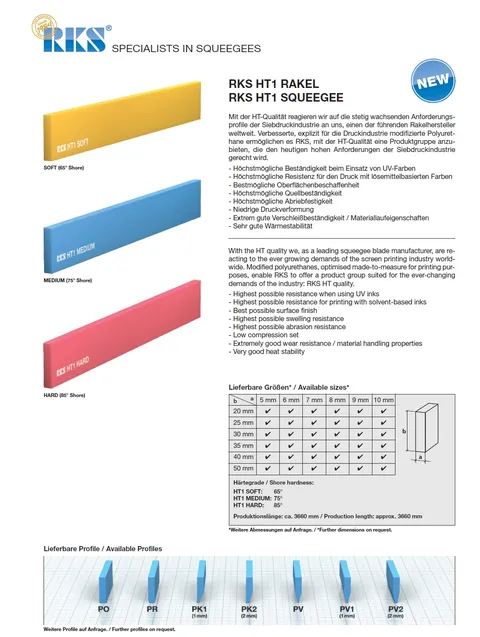
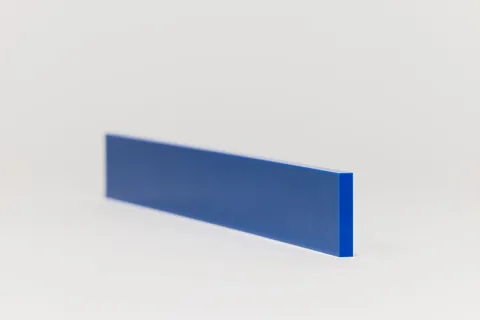
Single-durometer polyurethane strip (RKS HT1, Printan Monoflex)
One hardness through the whole strip. RKS HT1 comes in Soft 65, Medium 75 and Hard 85 Shore A in the RKS HT polyurethane, which is made for UV and solvent-based inks. Printan Monoflex is the universal strip, colour-coded from 65 to 95 Shore A. Heights 20 to 50 mm, thickness 5 to 10 mm, production length about 3,660 mm.
Best for: Graphic and general industrial screen printing with UV or solvent inks, on flatbed and cylinder presses.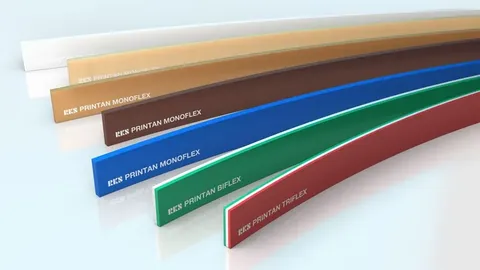
Dual-durometer strip (RKS Printan Biflex)
Two layers in one strip: a softer printing face of 65 or 75 Shore A backed by a 95 Shore A layer. The soft face seals against the screen; the hard backing resists bending under pressure.
Best for: Jobs that need a soft printing edge but a blade that stays straight on long strokes.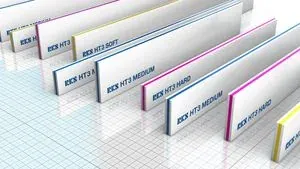
Triple-durometer or sandwiched strip (RKS Printan Triflex, RKS HT3)
Three layers: a hard core between two softer outer layers. Printan Triflex is 65/95/65, 75/95/75 or 65/95/75 Shore A. RKS HT3 has a 90 Shore A core and comes as Soft 65/90/65, Medium 75/90/75 and Hard 85/90/85, in heights 30, 40 and 50 mm and thickness 8, 9 or 10 mm. The HT3 polyurethane is made for polymer pastes and silver-containing media. Triflex is not made in 6 mm.
Best for: Solar cell and printed electronics paste printing, and any job where a soft edge and a stiff blade are both needed. The HT3 Hard grade is RKS's choice for extreme fine lines.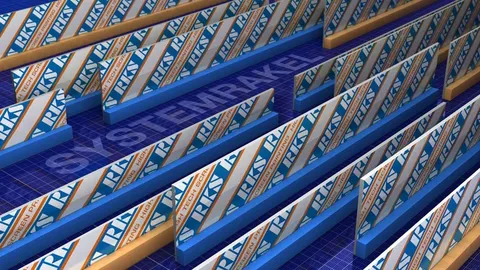
Glass-fibre stabilised blade (RKS System Squeegee)
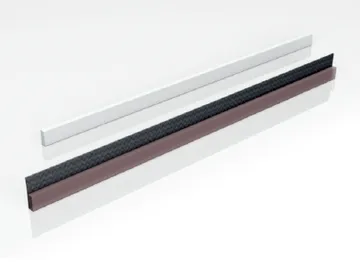
The original RKS two-component squeegee: a glass-fibre (GRP) carrier about 1.7 or 2.5 mm thick, permanently bonded to a 13 mm high Vulkollan polyurethane strip of 6 or 8 mm. Type 00 has a continuous carrier; Type 32 tapers from 2.5 mm to 1.4 mm in the PU area. Hardness 55 to 85 Shore A. Heights from 20 to 145 mm: blades up to 50 mm go into a normal holder with an aluminium shim, and 95, 105 and 115 mm blades clamp straight into RKS holders. Lengths from 100 to 2,800 mm.
Best for: Standardised, repeatable production on flatbed presses, where the same angle and pressure must hold across a long run.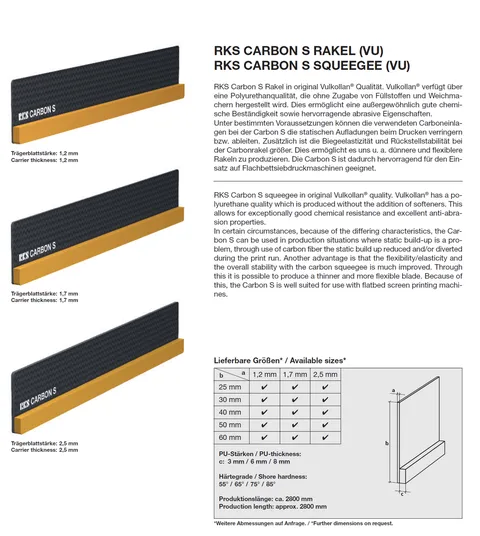
Carbon-fibre stabilised blade (RKS Carbon S, Carbon BW, Carbon HT PK)
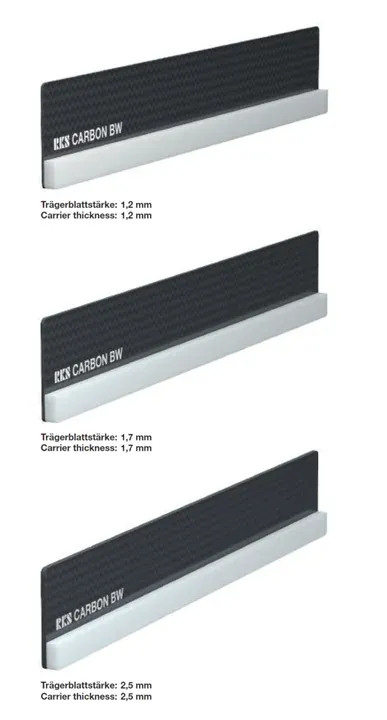
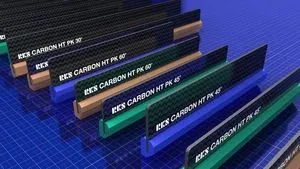
The same idea with a carbon-fibre (CRP) carrier, 1.2, 1.7 or 2.5 mm thick, which is stiffer than glass fibre so the blade can be thinner and more flexible. Carbon S carries a Vulkollan edge in 55 to 85 Shore A. Carbon BW carries the RKS HT edge, moulded onto the carrier by heat, with a 45 degree chamfer of 0.5 to 4 mm; from a 1.7 mm carrier it also carries static charge away through the machine's earthing. Carbon HT PK has a 14 mm thick HT edge in 65, 75 or 85 Shore A, ground at 30, 45 or 60 degrees, in lengths up to 400 mm.
Best for: Carbon S: flatbed presses that want a thin, flexible stabilised blade. Carbon BW: solar and printed electronics lines (DEK, Baccini, EKRA, ASYS and similar) where paste deposit must repeat. Carbon HT PK: SMT solder paste, head gaskets and 3D parts.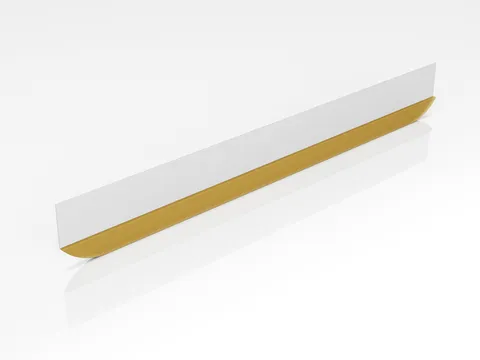
Rotary blade (RKS RS, RS CC, RS WP, RS WP CC)
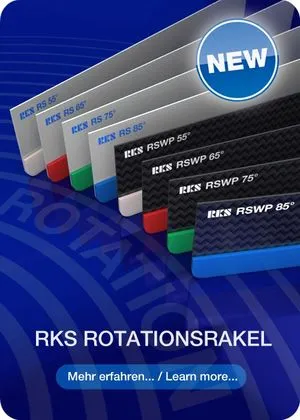
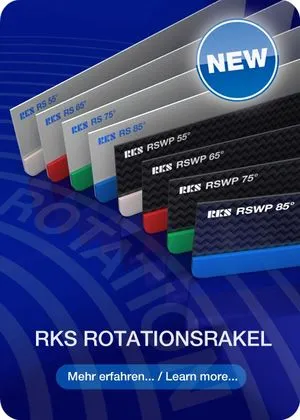
Thin, very flexible blades for rotary screen units: a 0.8 mm glass-fibre (RS) or carbon-fibre (WP) carrier with a Vulkollan or colour-coded HT edge of 1.5, 2 or 3 mm. The edge is rounded, in a small or large radius. RS WP types are cut to the length of specific Gallus units and ordered in lots of ten. All rotary blades can be reground.
Best for: Narrow-web label presses with rotary screen units. Use 3 mm at 55 Shore A for Braille and heavy deposits, 2 mm at 65 for normal work, 1.5 mm at 75 to 85 for fine lines and halftones.
Diamond-section strip (RKS Printan Diamond)
A square polyurethane strip of 9.5 x 9.5 mm or 9.65 x 9.65 mm, mounted on the diagonal so that one corner prints. Hardness 65, 75 or 85 Shore A, lengths 100 to 1,200 mm.
Best for: Solar cell and microelectronics printers whose print heads take a diamond squeegee.Edge profiles
The shape of the printing edge changes the deposit as much as the hardness does.
| Profile | Also called | Shape | Use |
|---|---|---|---|
| Flat or square edge | PO profile (to be confirmed by Sunstar), rectangular, 90 degree | The strip is cut square, so the printing edge is a sharp 90 degree corner. This is the standard profile on HT1 and Printan strips, and the RKS System blade is ground close to it, at 92 degrees plus or minus 1 degree. | The thinnest and sharpest deposit. Use it for fine lines, halftones, text and most graphic work. A sharp square edge is the first thing to check when detail goes soft. |
| Single bevel or slanted edge | PK1 and PK2 profiles with a 1 mm or 2 mm land (to be confirmed by Sunstar), chamfered edge, Carbon HT PK 30, 45 and 60 degree edge | One face of the strip is ground at an angle so the blade meets the screen on a slant, with a small flat land at the tip. On the Carbon BW the chamfer is 45 degrees with a land of 0.5, 1, 2, 3 or 4 mm; on the Carbon HT PK the edge angle is 30, 45 or 60 degrees. | A heavier, more even deposit than a square edge, with the blade angle built into the profile rather than set on the press. Used for pastes, thick films and gasket beads, and on printed electronics lines where the deposit must repeat. |
| Double bevel or V edge | PV profile (point), PV1 and PV2 with a 1 mm or 2 mm flat (to be confirmed by Sunstar) | Both faces are ground so the strip comes to a point, or to a narrow flat of 1 or 2 mm. The blade can print in both directions with the same edge. | Sharp, controlled deposit when the press prints on the forward and return stroke, or when the operator wants the edge to behave the same whichever way the blade is turned. |
| Rounded or curved edge | PR profile (to be confirmed by Sunstar), radius edge, small radius (SR/KR) and large radius (LR/GR) on rotary blades | The printing edge is rounded instead of sharp. On RKS rotary blades the radius is chosen when ordering: a small radius close to a square corner, or a large radius that is a long curve. | The heaviest deposit of the standard profiles. Used for textured surfaces, high ink films, Braille and textile transfers. A worn square edge turns into a rounded edge by itself, which is why the deposit rises as a blade wears. |
| Diamond edge | Printan Diamond, rhombic squeegee, diamond squeegee | A square section strip held on its diagonal, so the printing edge is a 90 degree corner with a face sloping away on both sides. | A sharp edge with a stiff body, fitted in solar and microelectronics print heads built for this profile. |
Hardness
Shore A, from soft to very hard, and what each band is for.
About the RKS line
Blades, holders and grinding machines from one maker in Germany.
Blades that keep their angle
RKS makes stabilised squeegees: a thin polyurethane printing edge bonded to a rigid glass-fibre or carbon-fibre carrier. The carrier holds the blade parallel to the screen through the stroke, so the printing angle and the pressure stay the same from the first sheet to the last.
Delivered ready to print
RKS stabilised blades (System, Carbon and Rotary) are ground on RKS grinding machines before dispatch. The print edge and the front face are ground flat and parallel, so the blade goes into the holder and prints without a first sharpening.
Every hardness and size
RKS offers Shore hardness from 55 to 95 Shore A depending on the series, PU thickness from 1.5 to 14 mm, heights from 20 to 145 mm, and cut lengths from 100 mm to 2,800 mm (PU strips up to about 3,660 mm). Non-standard heights are made on request.
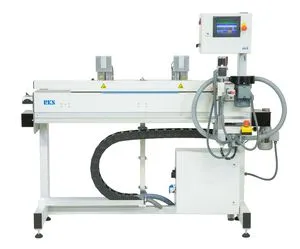
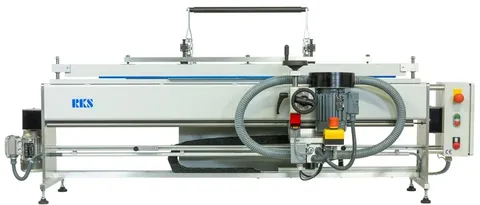
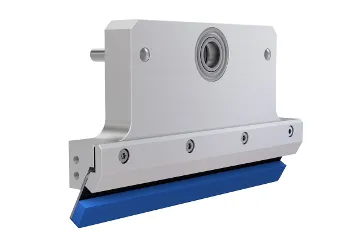
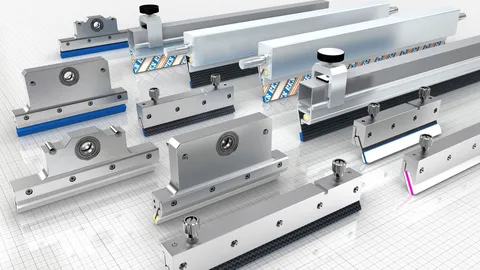
Squeegee blades, holders and sharpeners
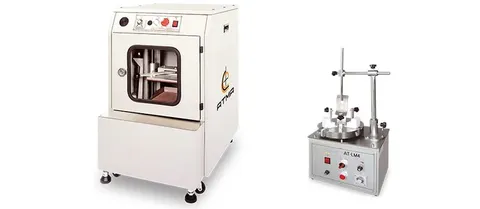
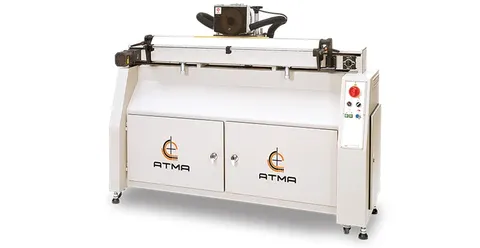
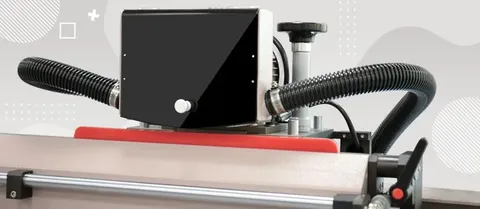
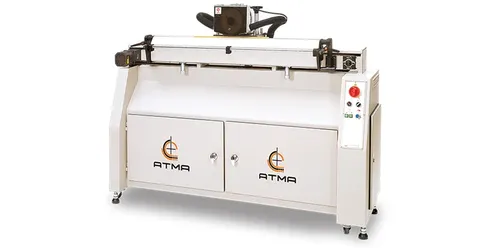
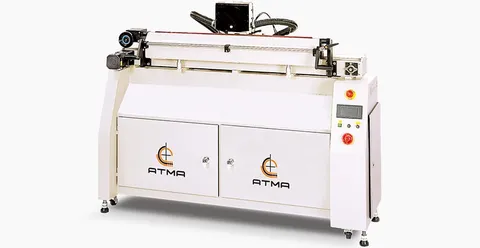
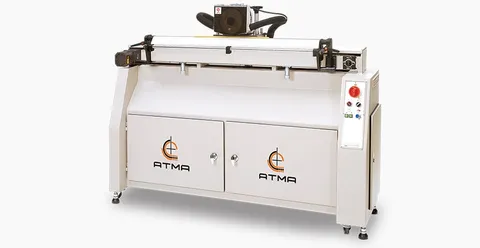
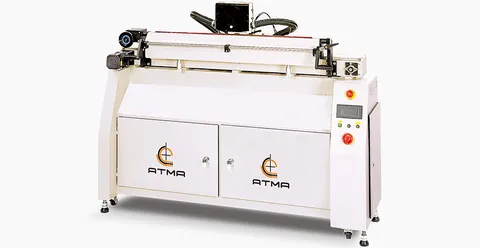
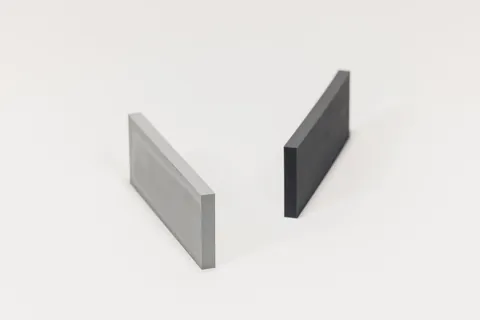
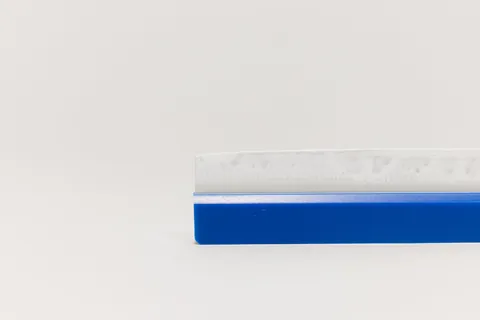
RKS and Kuroki blades, RKS holders and grinding machines, with ATMA sharpeners and ink mixers.
All brands →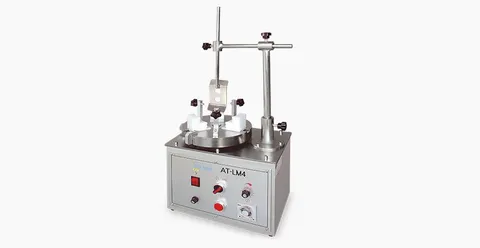
Read on
What is a squeegee in screen printing
A squeegee is a straight blade, usually polyurethane, that is drawn across the screen to push ink through the open mesh onto the material.
Read →Guide · 2How to choose a squeegee
Start with the ink: solvent and UV inks take a medium polyurethane blade, water-based and plastisol inks a softer one, conductive pastes a stabilised or triple-layer blade.
Read →GlossarySqueegee glossary
Every term on these pages, from Shore A to snap-off, in one list.
Open →ToolSqueegee finder
Five questions, or start from your industry. A hardness, edge, build, angle and blade length for your job, with the reason for each.
Try it →From Sunstar Academy
Real footage and short lessons from Sunstar's own channel.
All videos →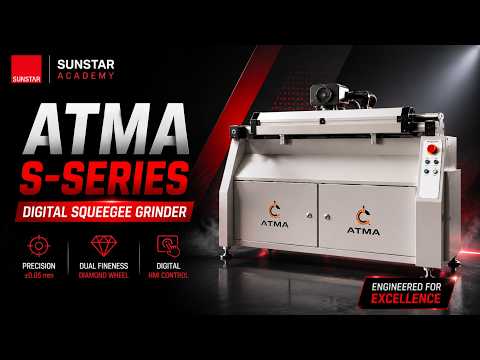

Questions buyers ask
Which squeegee hardness should I use for screen printing?
Use 65 to 75 Shore A for general work, 75 to 85 for fine lines and halftones, and 55 to 65 for heavy deposits and textured surfaces. Check the ink maker's data sheet, because the ink and mesh change the answer.
What is the difference between a conventional and a stabilised squeegee?
A conventional squeegee is a solid polyurethane strip, and it bends and softens as solvents soak into it during a run. A stabilised squeegee bonds a thin polyurethane edge to a glass-fibre or carbon-fibre carrier that keeps the blade straight and the angle constant.
Can RKS squeegees be sharpened in India?
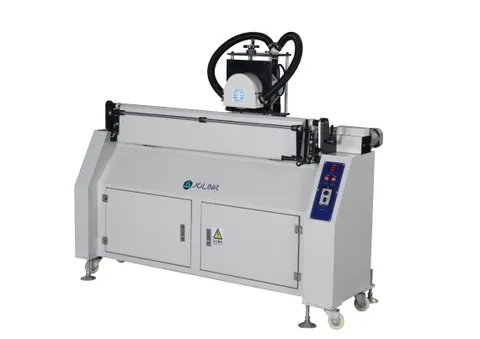
Yes. RKS blades can be reground many times on a squeegee grinder. Sunstar supplies the RKS SM 600 TT and 1200 TT grinding machines, which have an automatic feed and a grinding head set by hand, and the automatic RKS SM series, and installs and trains on them in India.
Do RKS blades fit my existing squeegee holder?
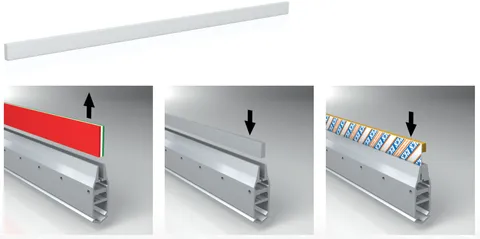
RKS blades up to 50 or 60 mm high fit a standard holder with an aluminium adapter strip. Taller blades of 95, 105 and 115 mm clamp directly into RKS Type U and Type S pneumatic holders, which fit most screen printing machines. Sunstar confirms the fit against your press.
Should I choose RKS or Kuroki?
Choose RKS if your line or machine specifies RKS blades and holders. Choose Kuroki if the press does not need them: the blades are made in Taiwan and priced for Indian printers. Send the press model and the job, and Sunstar tells you which line to use.
What is the price of an RKS squeegee in India?
The rate depends on the series, hardness, height, thickness and cut length. Send an enquiry with the blade specification or the press model and Sunstar Graphics will quote within one working day.
Inquiry
Ask for a blade.
Send the ink, mesh count, material, press model and image size. Sunstar suggests a blade from either line and quotes within one working day.