Start with the form of the material
The shape of what you print narrows the choice faster than anything else.
| What you print | Machine type | Reason |
|---|---|---|
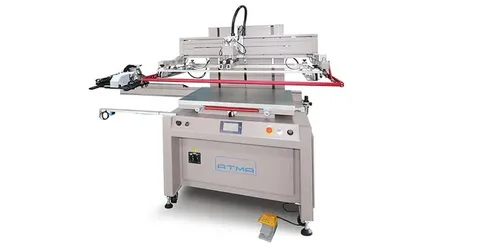
| Rigid sheets and plates: metal, thick plastic, board | Flatbed (flat bed) | The sheet stays flat on a vacuum bed |
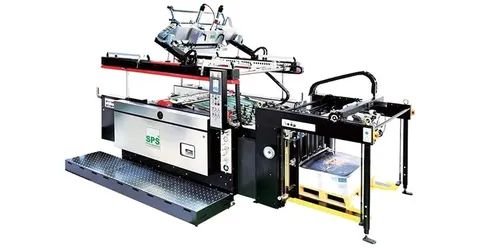
| Thin flexible sheets in long runs | Stop-cylinder press | Runs at 1,800 to 4,000 sheets an hour |
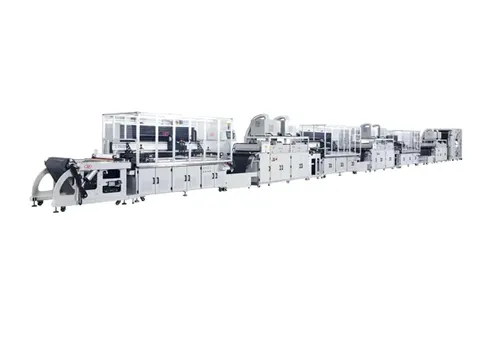
| Film or label stock on the reel | Roll-to-roll (reel to reel) | Prints, cures and rewinds with no sheet handling |
| Glass panels | Glass printing line | Built to load, register and deliver glass |
| PCB panels | PCB screen printer | Registers the board to pins or cameras |
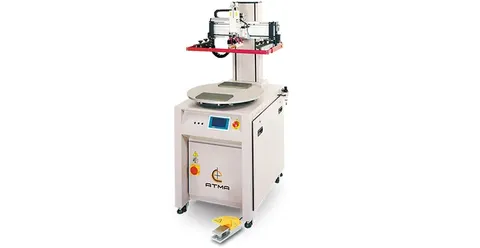
| Moulded parts and housings | Index-table or part printer | Each part sits in a fixture |
Fix the print size and thickness
List your largest print area and your largest sheet. The screen frame has to be larger than the image, so leave a margin. Choose the machine for your largest regular job. A press bought for a rare oversize job costs more and is slower to set for small work.
Note the thickest and thinnest material you print. ATMA flatbeds take material up to 25 mm thick. Cylinder and roll-to-roll presses take flexible material only.
Work out the output you need
Count sheets per shift, then multiply by the number of passes. Each colour or layer is one pass, so a dial with eight layers needs eight prints for every finished sheet.
A semi-automatic flatbed typically prints around 500 sheets an hour. A fully automatic flatbed prints more with less handling. A stop-cylinder press runs at 1,800 to 4,000 sheets an hour. If jobs change many times a day, changeover time matters more than top speed.
Know your register tolerance and your ink
Ask what register tolerance the part allows. Simple one-colour graphics allow a wide tolerance. Multi-layer work such as dials, membrane switches and printed electronics needs tight register on every pass. For this work, look at the stated repeat accuracy of the press and at whether it offers CCD camera registration.
The ink decides the dryer. Solvent and water-based inks need an IR hot-air tunnel. UV inks need a UV curing machine. Conductive pastes need longer drying at a set temperature. Check the ink maker's data sheet for the cure conditions and size the dryer to them.
Plan the whole line and the support
A press prints only as well as its screen. Budget for screen making as well: stretching, coating, exposure or computer-to-screen (CTS) imaging, washing and drying.
Ask each supplier who installs the machine, who trains the operators and where service and spares come from. Ask whether a demonstration or a sample print on your own material is possible before you order.
What Sunstar supplies and what to send
Sunstar Graphics is the exclusive distributor in India for ATMA, SPS and Lingtie presses, Grünig and SignTronic screen making machines, Luen Cheong dryers and RKS squeegees. It also supplies Kuroki squeegees from Taiwan. Sunstar installs the machines, trains operators and services them from Mumbai, across India.
Sunstar replies to an enquiry within one working day, and you can ask for machine options and Indian pricing. For a useful quotation, send these details:
- Material and thickness
- Largest print size and sheet size
- Number of colours or layers
- Output needed per shift
- Ink type: UV, solvent, conductive or other
- Register tolerance, if you know it