What is inside a test strip
A blood glucose strip is a small electrochemical sensor. It is built from printed layers on a plastic base:
- Base film: usually polyester (PET)
- Conductive tracks: silver or carbon ink, which carry the signal to the meter contacts
- Working and counter electrodes: carbon ink
- Reference electrode: silver/silver chloride (Ag/AgCl) ink, in designs that use one
- Insulation: dielectric ink with an opening that sets the exposed electrode area
- Reagent: an enzyme and a mediator that react with glucose in the blood
- Spacer and cover: form the small channel that draws in the blood sample
The printing steps
Each layer is printed on all the strips of the sheet in one stroke, then dried before the next layer. The exact order varies with the strip design.
- Print the silver tracks and contact pads, then dry
- Print the carbon electrodes, then dry
- Print the Ag/AgCl reference electrode where the design has one, then dry
- Print the insulation layer, leaving the electrode window and the meter contacts open. Cure by UV or heat, depending on the ink
- Apply the reagent over the electrode window, by screen printing or by dispensing
- Laminate the spacer and cover, then cut the sheet or reel into single strips
Why screen printing is used
Screen printing lays down a thick, even film of carbon ink in one pass, and it prints many strips with each stroke. This keeps the cost of each strip low. Carbon and silver pastes contain solid particles, and a screen mesh lets them through where finer printing processes cannot.
Drying temperature and time change the resistance of carbon and silver inks. Follow the ink maker's data sheet and keep the conditions the same for every batch.
The same method makes screen printed electrodes (SPE) for other biosensor and diagnostic strips.
What decides strip quality
- Electrode area. The meter reads a small current that depends on the exposed electrode area. That area is set by the carbon print and by the insulation window, so line width and register between the two layers both count
- Ink deposit. The resistance of a track follows its film thickness, so the deposit has to be the same on every sheet
- Clean handling. Dust and finger marks on the electrode change the result, so strips are printed in clean conditions with as little handling as possible
- Batch consistency. Strip makers test and calibrate each batch. The less the print varies, the fewer strips fall outside the limits
Sheet-fed or roll-to-roll
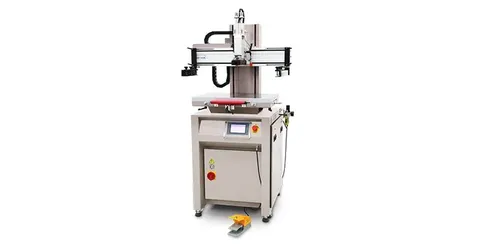
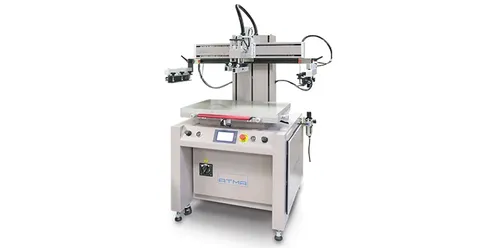
Small-format fully automatic flatbeds print sheets of strips. They suit development work, several strip designs and medium volume.
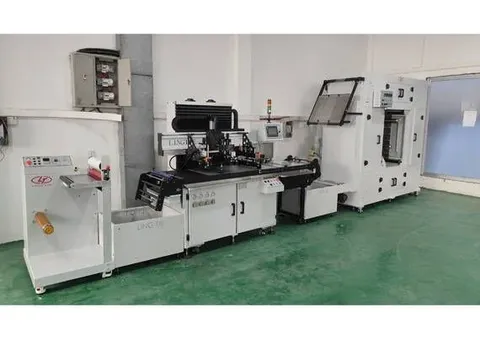
Roll-to-roll (reel to reel) presses print the film as a continuous web. A camera registers each repeat and a dryer in line dries the ink before rewind. They suit continuous production of one design.
What Sunstar supplies
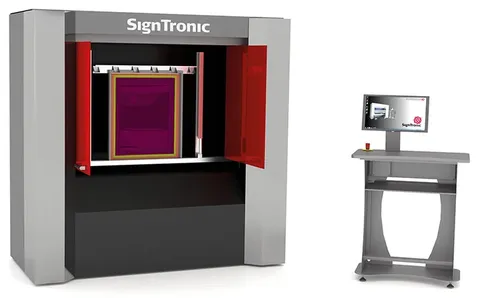
Sunstar Graphics supplies screen printing machines for glucose and biosensor test strips in India. The ATMA AT-25FA / 45FA and AT-60FA are fully automatic flatbeds for sheet work. The Lingtie LTA-4050 is a fully automatic roll-to-roll press. The SignTronic STM MICRO images fine-line screens direct from the file, and Luen Cheong IR tunnels dry the printed layers.
Sunstar is the exclusive distributor in India for these brands and installs, trains and services from Mumbai, across India. Send an enquiry with your strip layout, film width and volume. Sunstar replies within one working day, and you can ask for machine options and Indian pricing.