CTS and film positives compared
| Point | Film positives | CTS |
|---|---|---|
| Steps | Output film, check it, tape it to the screen, draw vacuum, expose | Load the screen, send the file |
| Consumables | Film for every colour of every job | No film |
| Image position | Set by hand each time | Same position on every screen, taken from the file |
| Fine detail | Depends on film density and contact. Light can creep under the film edge | No film or glass between the light and the emulsion |
| Dust | Dust on film or glass prints as pinholes | Fewer surfaces to keep clean |
| Size | Film changes size with heat and humidity | The file does not change size |
| Repeat jobs | Films are filed and found again | Files are stored on the computer |
| Investment | Low | Higher. Recovered through film, labour and setup time |
Where CTS pays for itself
Because every image sits in the same place on the frame, the press operator spends less time moving screens into register. On multicolour work this setup saving is often larger than the film saving.
To judge the payback, count the screens made each month, the film cost for each screen, the screens remade because of film faults and the minutes spent registering each screen on the press. Set that monthly saving against the quotation for the machine.
- The screen room makes many screens a day.
- Jobs have many colours that must register, such as dials and membrane switches.
- The work includes fine lines or halftones.
- Artwork changes often, or screens are remade often.
- Frames are large, so film is costly and hard to hold in contact.
Where film positives are still enough
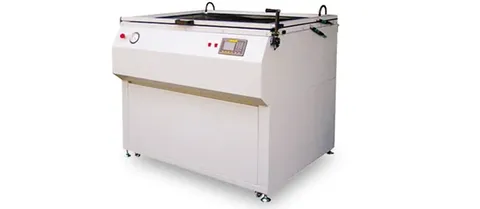
A shop that makes a few screens a week with bold line work can stay with film and a UV exposing unit. The capital cost is low and the method is familiar. Keep films flat, clean and in a room with steady temperature and humidity. Check the vacuum blanket and the glass often. Mark register targets on every film so the operator can place each one in the same position on the frame.
What CTS leaves unchanged
CTS replaces the film and the exposure step. The screen still has to be stretched to the right tension, degreased, coated to an even thickness, washed out and dried. A badly coated screen gives a poor stencil on any exposure system. The emulsion must also suit the light source of the CTS unit, so confirm the grade with the emulsion maker. Direct to screen and DTS are other names buyers use for the same method.
CTS machines Sunstar supplies
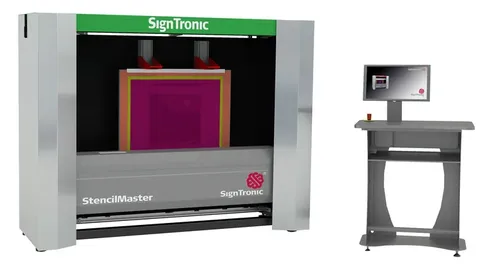
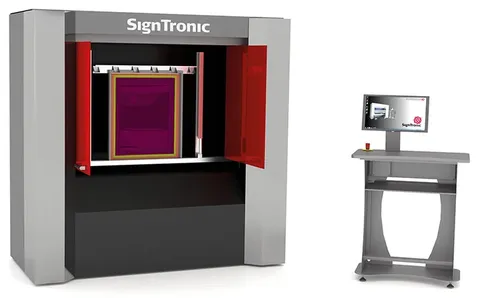
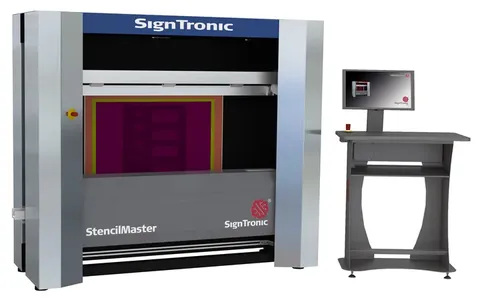
Sunstar Graphics supplies SignTronic StencilMaster computer-to-screen systems from Switzerland in India. They image the stencil directly with UV light from the file, with no film positives and no vacuum frame. The STM-ONE is the computer-to-screen imaging system, the STM MICRO is for fine-line work, and the STM-TEX series is for textile screens. For screen rooms that stay with film, the ATMA A411 is a UV exposing unit.
Send an enquiry with your frame sizes, screens per day and finest line width for machine options and Indian pricing.